S.N. Moorthy and George Mathew Division of Crop Utilization and Biotechnology, Central Tuber Crops Research Institute, Sreekaryam, Trivandrum - 695 017, INDIA. Referee : Professor Blanshard, Department of Applied Biochemistry and Food Science, University of Nottingham, Loughborogh, LE 12 5RD UK. Abstract Fermentation of cassava is an important processing technique followed in different parts of the world. Although fermentation is known to bring about vast changes in the physicochemical and functional properties of the tubers, attempts have seldom been made to consolidate and critically analyze the available information. Glaring inconsistencies and contradictions noticeable in some of the results reflect the differences and variation in the artisanal processes followed in the preparation of these products. It also stresses the need for systematic study of not only the quoted products, but also a number of other fermented cassava products and have not been well documented. Keywords : Fermented cassava products, physicochemical and functional properties, antinutrients, starch characteristics.
I. Introduction
Cassava is an important tropical crop valued for its tuberous roots. The tubers contain 20 to 25% starch and very minor quantities of proteins, fats, and other biochemical constituents.4-7 The importance of cassava (Manihot esculenta Crantz) to the teeming millions lies on more than one score. On an energy production basis, cassava, providing nourishment to 500 million people, ranks foruth after rice, wheat, and maize. T he crop is relatively efficient producer even under adverse conditions such as erratic low rainfall and low soil fertility. Higher efficiency of energy production, less labour required per calorie harvested, and a great degree of flexibility in the timing of labor inputs are other major facets of convenience in this crop.3 However, quick perishability, low protein content, and the presence of toxic cyanogenic glocosides in the tubers and considered to be unfavorable aspects that demand efficient post-harvest processing for the crop. Cassava is consumed in a number of ways and the mode of consumption varies from country to country. The normal processing techniques include cooking in boiling water, chipping and drying, parboiling roasting, and conversion to other food forms after extraction of starch or powdering into flour. Another mode of processing is subjecting the tubers to fermentation and subsequent conversion to different products. Gari, Fufu, Placali, Farinha from the African continent, Pande yucca, Pande bono, polvilho azedo from Latin America, and Tape Katella from the Far East countries are some of the fermented cassava products.1,8 In addition, many other minor food products are produced in other parts of the world. Cassava fermentation, as practiced, uses wide range of microbes,10-14 (lactic acid bacteria to yeast and mold); varied conditions14-16 (solid state to submerged anaerobic), and periods17,18 (overnight to weeks and months together) making available innumerable food products and alcoholic beverages. First of all, fermentation helps to reduce the toxic principle cyanoglucoside present in tubers.19-23 It also improves the flavor and taste and is helpful in increasing the shelf life of cassava products. The functional properties of starch are also modified to suit to different applications. The diverse methods of fermentation practiced in different countries and the multiplicity of products produced make it difficult to generalize the biochemical changes accompanying the fermentations. The effect of fermentation on cyanide detoxification has probably been the major subject of study by most workers so that the other biochemical changes have not been highlighted to a desirable extent. This review focuses on the biochemical changes accompanying the different fermentation techniques and the changes in functional properties of fermented starch and starch extracted from tubers subjected to different types of fermentations.
II. Popular Fermented Cassava Products
As mentioned earlier, a number of fermented products are prepared in different parts of the world. Different microorganisms under varying conditions are used to produce a large number of food products with different organoleptic and functional properties. The steps employed in their production and the microorganisms involved are outlined.
Gari
- Gari is a fermented cassava product widely consumed in many West African countries. The cassava tuber is harvested, peeled and washed, grated, and packed into coarsely knit bags. A weight is put on the bag to express some of the juice. It is then left to undergo natural fermentation for several days. The grated cassava, after sieving to remove any coarse lumps and impurities, is heated by means of constant turning over a heated steel pan.24On garifying, the grated cassava is dried to about 10% moisture content and the starch is probably partially dextrinized. At this stage a little palm oil may be added to give it color; the final dry granular product is gari. Cassava fermentation to gari is associated with a community of microorganisms, including yeasts and bacteria. The population densities of the organisms involved fluctuate over the period with the bacteria demonstrating rapid growth initially and yeasts predominating at the later period the fermentation. The microbiology of gari production was originally considered a two-stage process in which Corynebacterium sp. And Geotrichum candidum were reported to be responsible for acid and flavor production. Later studies revealed that among the microorganisms isolated from gari, Lactobacillus plantarum produced the most typical gari flavor. However, the involvement of five genera was revealed in gari fermentation : Leuconostoc, Alcaligenes, Corynebacterium, Lactobacillus, and Candida, and it was concluded that Leuconostoc was the most frequently occurring organism. It was also reported that Corynebacterium sp. Was the most abundant of a total of eight isolates, although its population declined toward the end of the fermentation period. The population densities of Leuconostoc sp. And Lactobacillus sp. Became almost stable after the fourth day, while those of Corynebacterium sp. And Alcaligens sp. Dropped significantly after third day. The contributions of microorganism to the organoleptic properties of gari were also studied. It was concluded that Lactobacillus plantarum and Leuconostoc mesenteroids were present in large numbers throughout the 96 h duration of cassava mash fermentation, while Corynebacterium Manihot and Geotrichum candidum were isolated only within the first 48 h and in small amounts. Of the wide array of reports on the microbes involved in gari fermentations, perhaps it may be concluded that lactic acid bacterial (LAB) have been found to be the predominant microorganism during the course of fermentation.
Fufu
- Fufu is the meal of soaked fermented cassava and is popular in African countries. The tubers are peeled, washed, cut into thick chunks (20 cm long) and soaked in water contained in earthen-ware pots or in a slow flowing stream for 5 to 5 d. during this period, the cassava tuber ferments and softens, releasing HCL into the soak water. A characteristic flavor of retted cassava meal is also produced. The retted tubers are disintegrated in clean water, sieved, and the starchy particles that go through the sieve are allowed to settle for about 3 to 4 h. the water is decanted while the sediment is packed into a cloth bag, tied, squeezed, and subjected to heavy pressure to expel excess water. The resulting mean is rolled into balls, and cooked in boiling water for about 30 to 40 min. the cooked mass is poundedin a mortar with a pestle to produce a paste, fufu, which can be eaten with sauce, soups or stew. The involvement of more than one species of LAB has been repoted in the production of fufu. A total of 134 LAB strains isolated during fufu production was studied in detail to show that the species of Lactobacillus and Leuconostoc dominated the spectrum. The succession among the LAB isolates revealed the dominance fo Lactobacillus plantarum. It was also shown that Saccharomyces cerevisiae, Lactobacilus fermentum, L. Brevis, streptococcus faeecalis, and Escherichia coli appeared to be important in the fermentation for fufu. The significance of Leuconostock and Lactobacillus was also emphasized. A total of 14 microorganisms was isolated in fufu collected from different areas in Nigeria. The distribution of LAB in cassava fermentations for fufu was examined in detail including characterization of the properties, strain categorization, perentage distribution, and succession of species. However, we are also in agreement of the ever, we are also in agreement of the observation of Adegoka and Babalola that the characteristics of microorganisms associated with the fermentation for fufu preparation have still not been fully elaborated, particularly when it is realized that the methods of preparation vary according to locality.
Lafun
- Lafun is a fine powdery cassava product that is prepared by fermentation and is commonly consumed in the western states of Nigerai. The whole or peeled roots are immersed in a stream, in stationary water (near a stream), or in an earthen - ware veself or 3 to 4 d and fermented until they become soft. The fermented roots are then taken out, the peel and central fibers of the fermented roots normally removed, and the pump broken into small crumbs and sundried on mats, racks, flat rocks, cement floors, roofs of houses, etc., Drying takes 1 to 3d, depending on the weather. T he dried crumbs are milled into flour. The flour is added into boiling water with constant stirring until a smooth thick paste is formed. The paste is cooled to about 350C and is then served with soups. The fermented and dried cassava pulp, lafun, is similar to 'Cossettes' in Zaire and Rwanda, 'Kanyanga' and 'Mapanga' in Malawi, and 'Makopa' in Tanzania. Five major microbial groups, similar to the spectrum of those implicated in other fermented cassava foods, were consistently isolated during lafun preparation. These include Bacillus sp., Klebsiella sp., Leuconostoc sp., Corynebacterium sp., Candida sp., and Lactobacillus sp. The microbial succession culminating in the domination of years and LAB after 48 h of fermentation was also elucidated. Nwachukwu and Edwards have associated five years, two molds, and three bacteria with the fermentation for lafun production, essentially stressing the role of LAB. However, the method of preparation adopted by them for lafun is not conforming to the earlier reports and has been questioned subsequently.
Chickwangue
- Chickwangue is the most popular processed food form of cassava in Zaire. 'Myondo' and 'Bobolo' in Cameroon, 'Mboung' in Gabon, 'Mangbele' in Central African Republic belong to this group. Similar products are consumed in Congo, sudan and Angola. Cassava roots are peeled, steeped in water, and left for 3 to 5 d to ferment until they become soft. Fibers are removed from the pump, which is heaped on a rack for further fermentation or covered with leaves and pressed using heavy objects to drain off excess liquid. The pulp is then ground on a stone or pounded in a mortar. The fine pulp is wrapped in leaves of plantain or species belonging to family Zingiberaceae, tied firmly with fibers from banana and steamed in pots. Chickwangue is a very stiff paste, much stiffer than fufu. The size, shape, and texture of the chickwangue food group vary among countries. Theya re produced under more hygienic conditions and contain the least cyanide compared with most other fermented cassava products.
Polvilho Azedo
- Sour cassava starch, known as 'polvilho azedo', is a typical Brazilian product obtained by fermentation of raw cassava starch for a period of about 30d. The end point of fermentation is not easily identified. The fermented starch, which has a strong and characteristic flavour, has many applications in local cookery and in the manufacture of biscuits and cheese breads. The sour starch process consists basically of root washing, peeling, grating, pressing and sieving under running water, fermentation, and drying in the sun. During the starch fermentation, the pH decreases as organic acids are released. The microorganisms involved in the process were analyzed, and it was concluded that no specific group prevails. However, Bacillus subtilis and Leuconostoc citrovorum were observed in almost all batches and are considered to be responsible for flavour development. Similar fermented starch is an important product in Colombia and used for the production of pan de yucca and pan de bono. However, the period of fermentation is usually shorter in Colombia. The shorter time required for the starch fermentation in Colombia is attributed to the higher ambient temperature prevalent there compred with that in Brazil.
Attieke
- It is fermented product popular in the Ivory Coast. T he roots are peepled, steeped in water for initial fermentation, and then ground to paste like for fufu and the paste is again left to ferment for 2 d in jute sacks and pressed. Finally, the paste is removed from the sacks crumbled or granulated, and then steamed. Attieke has a slightly sour taste and is eaten with milk or meat and vegetables. The difference from fufu preparation is the steaming step in the final stages.
Peujeum
- It is a traditional food prepared from cassava in Java. The roots are peeled and steamed until tender, allowed to cool, and dusted with finely powdered 'ragi' (a mixture of flour and spices in which fungi and yeasts have been active). The cassava mash mixed with ragi is wrapped in banana leaves and left for 1 to 2 d ferment in earthenware. The peujeum has a refreshing acidic and slightly alcoholic flavour and is eaten either as is or after baking.
Fermented Sour Flour and Fermented Sweet Flour
- It has been found that cassava tuber when subjected to fermentation with a select group of microorganisms comprising Lactobacilus cellobiosus, Streptococcus lactis, Corynebacterium sp., and Pichia membranaefaciens softened the tubes and improved extraction of starchy flour without liberating foul smell. Freshly harvested cassava a tubers are peeled and cut to form 10-cm cylindrical pieces. The tuber pieces are stacked in a large plastic bucket of 100 1 capacity. Tap water is added to provide a 10 to 15 cm column of water over the stacked pieces. One hundred kilograms of tuber pieces require about 100 1 of water to have such a surface column. Mother liquor from an earlier batch of fermentation is added to give a concentration of 2% by volume of the steep water as the source of mixed culture inoculum. The tuber pieces in steep water are stirred well to mix the inoculum uniformly. The container is covered with a muslin cloth and kept undisturbed for 48 h. The steep liquor is then decanted and the softened tuber pieces taken out and placed on an inclined wire net for faster sun drying. The dried pieces are powdered and passed through 30 mesh sieve to get fermented sour flour (SRF). The softened pieces are mashed, sieved, and allowed to settle in excess of water (1:5) and the sediment dried to yield fermented sweet flour (SWF) (Figure 1). Raw cassava flour possesses a cohesive texture on heating in the presence of water, and this imparts a rubbery consistency to the processed food products. The cohesive texture is due to the rapid breakdown of starch granules in raw cassava flour and adversely affects the substitution of cassava flour in place of cereal flour for preparation of food items. Fermented cassava flour offers additional stability to starch granules, thereby reducing the cohesive texture. The improvement in cooking quality of the fermented flour may be attributed to the enhanced quantity of fibrous residue and higher elasticity imparted to the starch granules,, which prevents easy break down.
III. Changes in Physical Characteristics
Fermentation brings about perceptible changes in the physical characteristics such as dry matter content, texture, and appearance of the tubers, and these are described in the following paragraphs. A. Dry Matter Dry matter content in gari and fufu produced by different methods have been compiled (Table 3). Oteng-Guang and Anuonye found a rapid decrease in dry matter during the third and fourth days of fufu fermentation. Oyewole and Odunfa reported that moisture content increased to 70.34% within first 36 h and then gradually decreased around 60% for the remaining period during lafun fermentation. The loss during the laster period was attributed to osmosis. The change in moisture content observed by these workers is in contrast to the results obtained by Nwachukwu and Edwards.
100 ℓPUT PIECES IN A CONTAINER ADD WATER TO HAVE 10 - 15CM TOP LAYER ↓
2 ℓADD MOTHER LIQUOR AS INOCULUM TWO PERCENT OF THE VOLUME OF WATER AND MIX ↓
COVER WITH MUSLIN CLOTH AND INCUBATE FOR 48h AT AMBIENT TEMPERATURE (30-320C) ↓
DECANT STEEP LIQUOR AND MASH THE TUBER ↓
↙↘ DISPENSE IN EXCESS OF WATER, SIEVE, ALLOW TO SETTLE, SEDIMENT DRIED TO GET SWF SUN / OVEN DRIED, SIEVE TO GET SRF
Source : MATHEW GEORGE Figure 1. Flow chart for Sour and sweet flours.
Dry matter content in gari and fufu produced by different methods have been compiled (Table 3 ).47 Oteng-Guang and Anuonye found a rapid decrease in dry matter during the third and fourth days of fufu fermentation .48 Oyewole and Odunfa reported that moisture content increased to 70.34% within first 36 h and then gradually decreased around 60% for the remaining period during Lafun fermentation. The loss during the later period was attributed to osmosis.36 The change in moisture content observed by Table 1. (A) Changes in Dry matter and Starch Content of Cassava during Gari Preparation
| Item | Dry Matter2 | Starch2 (g/100 g) |
|---|---|---|
| Starting mash | 37.6a±0.5 | 87.7a±3.1 |
| 24 h fermentation | 40.9a±0.5 | 82.7a±3.2 |
| 48 h fermentation | 40.7a±1.3 | 85.4a±5.2 |
| 24 h pressing | 48.7a±2.8 | 80.7a±2.8 |
| 48 h pressing | 50.3a±1.0 | 79.4a±6.4 |
| Roasting | 84.5a±0.9 | 86.2a±2.8 |
(B) Changes in Dry Matter Content of Cassava during Lafun Preparation
| Item | Dry Matter2(%) |
|---|---|
| Mash | 39.3a±0.07 |
| 5-d soaking | 39.9a±0.53 |
| 5-d soaking + 48 h drying | 86.5a±2.30 |
| 5-d soaking + 96 h drying | 86.2a±0.12 |
Note: 1. Means in each column with a dissimilar letter are significantly different according to Duncan's Multiple Range Test (p < 0.01). 2. Average of nine determinations (triplicates for each harvest period) Source: Keitku et al.45 These workers in contrast to the results obtained by Nwachuku and Edwards.12 The effect of fermentation with amixed culture inculum on the dry matter content in four varieties has been examined. The dry weight showed a decrease in all the four varities. The maximum decrease was found within 24 to 48 h in all cases. The decrease in dry matter can be partly due to reduction in sugar and starch contents. In addition, the softening of tubers may be leading to increased absorption of water, contributing to the reduction in dry weight.44 B. Softening of Roots During the soaking of roots for production of gari, fufu, or Lafun, the texture of the roots undergo noticeable change and the roots are rendered soft. A few attempts have been made to quantify the softening and use it as an index to monitor the extent of fermentation. Generally, it has been observed that the softening of tubers sets in during the second day and continues until the fourth day in the traditional fermentation. Among the different cultures tried for fufu production, B. subtilis showed the highest of softening capability (Figure 3).32 Ampe et al. has used softening of tissues as an index for determining the retting velocity.49 In this study, the softening was monitored using a penetrometer and the values used to determine the time taken for fermentation. Based on the results, the optimum conditions for the production of fufu were standardized. The effect of fermentation on three varieties having different textural characteristics has been studied.50 The rate of tissue disintegration during fermentation did not follow any definite pattern with respect to texture index or hardness of cooked tissues. However, the texturally intermediate type was found to be most resistant to tissue breakdown during fermentation (retting). Analysis of the textural changes taking place during 12 h fermentation of tubers under laboratory conditions indicated that microorganisms in cassava fermentation may include softening by producing proteolytic enzymes that activate enzyme polygalactouronase in cassava tissues.51 The rate of softening of tubers was enhanced with decrease in size of tuber pieces and a temperature of 30 to 40*C and duration of 48 h facilitated good retting requird for fufuf production.31 The softening of tubers during fermentation by a mixed culture incolumn has been investigated in detail.52 Force deformation behavior of two varieties (H-1687 and H-2304) under axial compression loads was evaluated. Fresh tubers were subjected to fermentation for 18, 24 and 48 h. The ultimate compressive strength of the tubers decreased as the period of fermentation was increased from 0 to 48 h (Table 4). The deformation at rupture values increased with duration of fermentation. This was true for the two varieties examined, but the difference in the initial compressive strengths was observed between them. The reduction in initial compressive strength was 8.54% for H-2304 and 20.06% for H-1687 after 48 h fermentation (Figure 4). The typical load deformation behavior of the tubers after fermentation has also been examined. The fermented tuber specimen started 'flowing' during the later half of compression tests resulting in higher deformation without an appreciable increase in the compressive load. The effect is directly related to fermentation period. This implies that cutting of tubers may not be so easy after fermentation. Tubers of H-2304 fermented for 24 h were having similar compressive strength as tubers of H-1687 fermented for 48 h. The results indicate that original compressive strength is a characteristic inherent to the variety and hence the period of fermentation for optimum softening depends on variety. Thus, the optimum period of fermentation may be taken as 24 h for H-1687 and 48 h for H-2304. Table 2 Changes in Moisture Content, pH Value and Titratable Acidity during the Gari Fermentation Using fresh Cassava and Cassava that had been frozen as Raw Materials.
| Moisture Content(%) | pH Value | TTA (lactic acid) | Log Viable Count | |||||||
|---|---|---|---|---|---|---|---|---|---|---|
| SPC | LAB | |||||||||
| Time (d) | Fresh | Frozen | Fresh | Frozen | Fresh | Frozen | Fresh | Frozen | Fresh | Frozen |
| 0 | 64.7 | 64.3 | 6.4 | 6.3 | 0.09 | 0.11 | 2.5 | 2.7 | 3.1 | 3.9 |
| 1 | 64.7 | 64.3 | 6.4 | 6.3 | 0.09 | 0.11 | 2.5 | 2.7 | 3.1 | 3.9 |
| 2 | 64.7 | 64.3 | 6.4 | 6.3 | 0.09 | 0.11 | 2.5 | 2.7 | 3.1 | 3.9 |
| 3 | 64.7 | 64.3 | 6.4 | 6.3 | 0.09 | 0.11 | 2.5 | 2.7 | 3.1 | 3.9 |
| 4 | 64.7 | 64.3 | 6.4 | 6.3 | 0.09 | 0.11 | 2.5 | 2.7 | 3.1 | 3.9 |
| Gari | 7.8 | 8.2 | ||||||||
Note: SPC, standard place count, plate count agar. LAB, lactic acid bacteria, MRS agar. Source : Vasconcelos. Figure 2. Changes in moisture content during gari fermentation. (Reprinted with permission)
(a) Bacteria
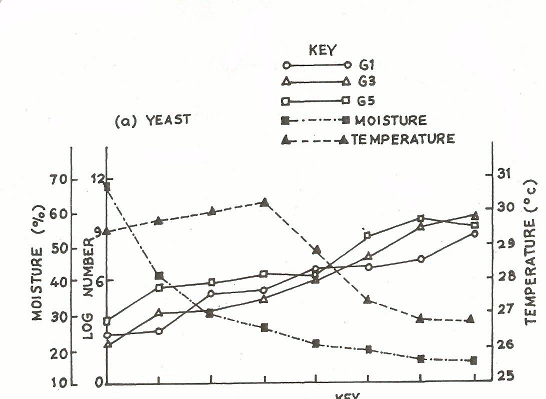
(b) Yeast

Table 3 Analysis of Traditionally Produced Gari and Mechanized Product Compared with Fufu
| Constituent | Village Gari | FIIRO gari | FIIRO cassava fufu |
|---|---|---|---|
| Carbohydrate Content (by difference) (%wt) | 81.8 | 87.0 | 73.0 |
| Water Content(%) | 14.4 | 8.2 | 8.6 |
| Oil Content(%) | 0.12 | 0.1 | 0.44 |
| Crude Protien(%) (N x 6.25) | 0.9 | 1.5 | 1.26 |
| Crude Fiber (% wt) | 1.4 | 2.3 | 1.6 |
| Ash (%wt) | 1.4 | 0.9 | 0.15 |
| Calcium (mg/100g) | 17.7 | 45.6 | - |
| Iron (mg/100g) | 2.0 | 2.2 | 0.0015 |
| Phosphorous (mg/100g) | 57.2 | 56.9 | 0.02 |
| HCN Content (ppm) | 19.0 | 10.0 | 16.0 |
| Swelling (%vol) | 32.0 | 300.0 | - |
Source: Steinkraus47 Figure 3
Textural changes during fufu production.(reprinted with permission)

Softening of tissues during fermentation can be attributed to enhanced action f pectinolytic and celluloytic enzymes produced by the microorganisms. The softening will be very helpful in size reduction operations such as crushing or grinding. Fermentation of Cassava is a microbial degradative process whereby the firm tuber is broken down into soft, easy, disintegratable lump. The degradation process is belived to principally involve the structural framework that binds the starch molecules.53 The enhanced activity of cellulose and pectinolytic enzymes, pectin methyl esterase and polygalacturonase, during the course of fermentation of cassava inoculated with a mixed culture inoculum facilitating cell maceration is reported.17 The effect of fermentation on the softening of tubers and the involvement of proteolytic enzymes in the process has been studied in detail.51 The ability of mixed culture inoculum to bring about softening in seven popular varieties of cassava during bulk fermentation, facilitating production of fermented sour flour (SRF) is brought out in Table 5. The dry weight of the tuber influenced the quantity of SRF produced. Thus, Mankuzhanthan, which had the highest tuber dry weight, yielded the maximum quantity of SRF, while H.165 had the least. However, the efficiency index of product recovery (EI) is influenced by the cooking quality of the tuber. The direct involvement of the structural framework of cell in deciding traits of cooking quality and softening of tuber may probably explain the higher EI observer for the mealy type of tuber from M4 and Ambakadam.54 It was also observed that the cells of cooked tubers were held less cohesively, that is, there was more cell disintegration in mealy varieties than in non-mealy ones.55 Table 4 Effect of Fermentation Period on Compressive Strength and Deformation of Peeled Cassava Tubers (H 2304) Under Axial Loading
| Duration of Fermentation h | Comprehensive Strengtha Kg/cm2 | Deformationa at failure % | Tuberb diameter cm | Radius of gyration cm | Slendernes ratio |
|---|---|---|---|---|---|
| 0 | 6.827 (0.89) | 10.92 (2.11) | 4.57 (0.8) | 1.62 | 6.17 |
| 18 | 6.479 (0.70) | 12.08 (2.06) | 6.16 (0.62) | 2.18 | 4.59 |
| 24 | 2.389 (0.54) | 13.12 (1.41) | 4.84 (0.55) | 1.71 | 5.85 |
| 48 | 0.583 (0.24) | 7.53 (3.16) | 4.84 (0.61) | 1.71 | 5.85 |
Note : Standard deviation values in parenthesis. Length of tuber specimen: 10cm each. a Average of atleast 4 test runs. b Average of atleast 16 observations. Source: Nanada and Mathew George52.
Graph figure 4: comprehensive strength of fermented tubers. (reprinted with permission)

IV. Biochemical Changes
The biochemical changes taking place during different fermentations have been elucidated. The results obtained are described. A. pH Reduction in pH during fermentation has been reported by almost all workers. However, the level to which the pH falls and the period taken for the pH reduction vary not only with the type of fermentation but also the conditions used for fermentation. Following the earliest scientific report by Colard and Levy,26 many others have monitored the pH during the different modes of fermentation and the values are summarized in Table 6. Table 4 Tuber Characteristics and Extraction of Cassava Flour Through Bull Fermentation
| Variety | Cooking Quality | Dry Weight (g) | SRF (g) | Waste (g) | Efficiency index of product Recovery (%) |
|---|---|---|---|---|---|
| Manukuz-Hanthan | ++ | 48.3 | 42.77 | 0.12 | 87.58 |
| Ambakadan | ++ ++ | 40.45 | 38.30 | 0.12 | 94.68 |
| S 856 | +++ | 38.00 | 29.66 | 7.00 | 78.05 |
| M4 | ++ ++ | 36.43 | 34.70 | 0.23 | 95.25 |
| H 2304 | +++ | 34.50 | 30.95 | 3.90 | 89.71 |
| H 1687 | +++ | 32.00 | 29.09 | 1.19 | 90.90 |
| H 165 | + | 26.91 | 20.11 | 5.80 | 74.73 |
Note: SRF = sour fermented flour, ++ ++ = excellent, +++ = good, ++ = poor, + = very poor Source: Mathew George54. Based on the studies on gari fermentation, Akinrele has suggested a two-stage mechanism.14 In the first step, the bacteria Corynebacterium manihot attack the starch producing lactic acid and formic acid, bringing down the pH to 4.25. At this stage a mold, Geitricum candida, brings about further acidification and gari flavor. Vasconcelos reported that in gari fermentation, the pH came down in 24 h and then remained steady. However, no reduction in pH was observed in irradiated controls. The author suggests that because lowering of pH may stabilize the cyanohydrin, fermentation may not have a significant role in the detoxification. He also has compared two methods of dewatering during gari preparation. Dewatering of grated fermented cassava using either a screw press after fermentation and allowing water to continuously run off did not bring about any major difference in pH (Table 2).46 The use of L.cellobiosus and L.plantarum reduced the lag phase during gari type fermentation. By increasing the initial acidifying microbial population, the acid level condition could be reached earlier. Although initial pH ahd no effect on final pH, addition of dextrose facilitated reduction in pH to the lowest level within 48 h.61 The effect of temperature on pH reduction during fermentation for the preparation of fufu has been studied in detail.15 The addition of legumes did not influence the fufu fermentation62 (Table 7). Examination of the pH changes at intervals of 24 h in steep water and fermenting tubes during Lafun fermentation revealed that the major drop occurred during the first 24 h in both cases and thereafter only minor changes were noticed.36 There was not much difference between steep liquor and tuber pieces. It was realized that in production of chickwangue from cassava by an improved technique, the pH reduction beyond a certain stage was not possible, which otherwise could have improved the nutritional quality.63 Heap fermentation seems to be exceptional in that the pH rose during later stages56. The pH dropped from 6.3 to 5.5 and thereafter showed an increase to 8.0. The higher pH during the later s tages might be helping to break down acetone cyanohydrin. In pit fermentation, the pH initially remained high and dropped (figure 5).64 Table 6 : pH and Titrable Acidity during Fermentation
| pH | Titrable acidity | |||||
|---|---|---|---|---|---|---|
| Product | Initial | Final | Initial | Final | Period (days) | Ref. |
| Gari | 5.9 | 3.7 - 3.95 | - | - | 4 | 14 |
| 5.9 | 3.7 - 3.95 | - | - | 4 | 14 | |
| 7.1 | 4.3 | 0.12 | 0.15(%) | 5 | 25 | |
| 6.1 | 4.1 | 0.09 | 0.72(lactic acid %) | 3 | 19 | |
| 6.4 | 4.4 | 0.09 | 0.91(lactic acid %) | 4 | 46 | |
| - | 4.1 | - | 0.68(lactic acid %) | - | 29 | |
| 6.2 | 4.0 | 1.2 | 3.4(mg NaOH/g) | - | 47 | |
| Mash | 4.5 | 3.9 | 0.44 | 0.76 (lactic acid %) | 4 | 29 |
| Fufu | - | 4.64 | - | 4.8 (lactic acid equiv) | 4 | 15 |
| 6.8 | 3.9 | - | - | 1 | 25 | |
| E. Niger | 6.7 | 4.5 | 0.01 | 0.56 | 3 | 19 |
| W. Niger | 7.0 | 4.9 | 0.02 | 0.5 | 3 | 19 |
| Lafun | 7.0 | 4.5 | 0.01 | 0.25 (ml 0.01N NaOH) | 5 | 10 |
| 7.8 | 5.8 | - | - | - | 12 | |
| 6.58 | 3.95 - 5.25 | - | - | 3.5 | 13 | |
| Farhina | 6.62 | 4.6 - 4.7 | - | - | 3 | 22 |
| Heap ferm | 6.3 | 5.5 | - | - | 2 | 56 |
| - | 8 | - | - | 6 | 56 | |
| Starch ferm | - | 3.8 | 0.1 | 1.0(%) | - | 57 |
| 6.54 | 5.06 - 5.17 | - | - | - | 58 | |
| 6.8 | 4.5 | - | - | - | 59 | |
| Extraneous Enzyme | 6.0 | 4.7 | - | - | 3 | 60 |
| Culture Provided | 7.0 | 4.4 | 1.0 | 6.8 (mg/g) | 3 | 61 |
| Inoculum provided | 6.0 | 4.0 | - | - | 3 | 44 |
Table 7: Effects of Time of Introduction of 20% (w/w) Cowpea and Soya Bean Flours to Fermenting Cassava on Final pH, Total Tirable Acidity and Overall Acceptability of Fufu.
| Time of Introduction (h) | Legume | pH | Total titrable acidity | Overall acceptability ratings |
|---|---|---|---|---|
| 0 | Cowpea | 3.8 | 0.41 | 2.3 (0.4) |
| Soya bean | 3.5 | 0.41 | 2.6 (0.3) | |
| 24 | Cowpea | 3.8 | 0.43 | 2.7 (0.8) |
| Soya bean | 4.2 | 0.36 | 2.6 (0.3) | |
| 48 | Cowpea | 3.9 | 0.43 | 3.6 (0.4) |
| Soya bean | 4.6 | 0.36 | 3.3 (0.2) | |
| 72 | Cowpea | 3.9 | 0.43 | 3.5 (0.6) |
| Soya bean | 4.3 | 0.36 | 3.3 (0.5) | |
| Controla | 3.9 | 0.41 | 3.8 (0.2) |
a No legume assumed. Values in parentheses are SD. Source: Oyewole and Abior. A comparison has been made between sweet and bitter varieties subjected to traditional fermentation, and it was noted that the pH dropped from 6.0 to 3.9 and 6.2 to 3.9, respectively.65 A fall in pH from 6.0 to 4.7 after 72 h with extraneous enzymes was also noticed,66 while reduction in pH to 3.9 within 24 h during lab fermentation was also reported.12 Reduction in pH was higher fro small-sized chips and the reason has been attributed to the higher surface area.60 Numfor et al. observed in a comparative study that the pH declined from 6.58 to 4.11 in natural fermentation and from 6.9 to 4.51 in inoculum provided fermentation67. Cereda observed that the pH fell from 6.2 to 3.2 in oth open and closed conditions of starch fermentation16. The most prominent fall occurred during the first 24 h in inoculum provided fermentation.17
B. Titrable Acidity As can be expected, Titrable acidity also undergoes changes during fermentation. However, it is difficult to compare the data published, as the units used for expressing the values are different. The acidity has been expressed as percent lactic acid or total acidity percent. The acidity in fermenting mash and the gari prepared therefrom was compared at 24 h intervals and a regular increase was noticed28 (Table 8). The addition of dextrose at various levels led to a lag phase of 8 h followed by a continuous increase in acid content at 48 h, suggesting that sugars are not limiting factor in gari fermentation.61 Akinrele found that the gari quality could be related to total acidity, the most acceptable being one with an acidity of 0.92% ( expressed as lactic acid), compared with 0.40% for the poor quality gari.14
Changes in pH during pit Fermentation

Correlation between pH and Titrable acidity in garl and fufu fermentations

A correlation between total acidity and pH during fufu and gari fermentation was noticed68 (Figure 6). The increase in titrable acidity during fufu fermentation at different temperatures was examined.15 The total acidity by HPLC and lactic acid equivalent were both enhanced to very large extent during fufu preparation; however a further increase during storage was negligible. The effect of temperature during soaking was not appreciable (Table 9). The increase in total titrable acidity during fufu fermentation was highest with Lactobacillus plantarum among the different cultures examined32 (Table 10). The titrable acidity could be correlated with the microbal load during Lafun fermentation10 (Figure 7). The titrable acidity was compared between closed and open systems, and the value from the open experiment was about twice that of the closed system.16 In our laboratory, it was observed that the total acidity increased during fermentation of cassava tubers with mixed culture inoculum.44 Table 9: pH and TTA of Fufu samples during Processing and storage
| Storage | ||||||||
|---|---|---|---|---|---|---|---|---|
| Soaking treatment | Acidity | Soaked Mash | Fresh Fufu | 1 week | 2 weeks | 4 weeks | 8 weeks | 12 weeks |
| 350C for 24 h | pH | 5.05 | 4.28 | 3.81 | 3.83 | 3.87 | 3.82 | 3.83 |
| TTA | 3.6 | 7.1 | 12.6 | 13.3 | 13.3 | 14.1 | 12.4 | |
| 300C for 48 h | pH | 4.47 | 4.26 | 3.91 | 3.94 | 4.03 | 4.47 | 4.53 |
| TTA | 5.4 | 7.4 | 11.4 | 11.7 | 11.3 | 9.2 | 9.3 | |
| 250C for 72 h | pH | 4.30 | 4.26 | 3.93 | 3.94 | 3.94 | 3.97 | 3.99 |
| TTA | 6.5 | 6.7 | 11.0 | 11.9 | 11.3 | 11.7 | 11.2 | |
| 200C for 96 h | pH | 4.60 | 4.54 | 4.08 | 4.00 | 4.00 | 3.92 | 3.86 |
| TTA | 4.7 | 4.8 | 8.1 | 10.1 | 10.1 | 12.9 | 12.4 | |
Note: Values are the average of duplicate determinations and TTA is expressed as lactic acid equivalents (g kg-1) on a wet weight basis. Samples were soaked and then stored at the temperature indicated in the first column. Source : Blanshard et al.68 with permission. Table 10 : Effect of Different Cultures On Titrable Acidity During Fufu Fermentation
| Culture used | Titrable | acidity | (% lactic acid) |
|---|---|---|---|
| Initial (0 h) | Final (96 h) | ||
| L.plantarum | 0.072 | 0.250 | |
| Bacillus subtillis | 0.072 | 0.128 | |
| Klebsiella sp. | 0.072 | 0.125 | |
| Candida krusel | 0.072 | 0.126 |
Adapted from Oyewole.32
C. Organic Acids The microorganisms present in the fermenting medium convert starch and sugars in the tubers to organic acids, which impart the characteristic odour and taste to the different fermented products. Although lactic acid is one of the common acids reported in almost all types of fermentation (Table 11), many short and long chain acids, esters, aldehydes, etc. have been detected and quantified by GLC and HPLC. While only lactic acid was reported in gari by Akinrele,14 a number of other acids have been reported in detailed studies on gari prepared using different cultures as well as natural fermentation. The flavor components were analyzed by GLC and the organisms properties by a ten-member taste panel. Formate, acetate, propionate, isobutyrate, n-butyrate, methyl acetate, methyl propionate, methyl lactate, methyl isobutyrate, methyl-n-butyrate, methyl succinate and dimethyl oxalate were found both in mash and probably driven off during frying into gari. Methyl lactate was present, whereas methyl-n-butyrate was absent in the most acceptable samples. The organic acid content in gari produced using irradiated cassava inoculated with homofermentative Lactobacillus plantarum, heterofermentative Lactobacillus brevis, and with natural microflora was examined.46 Among other results the disappearance of malate from natural fermentation and that inoculated with L.brevis has been explained as due to malolactic fermentation.
Changes in pH during pit Fermentation

Table 11: Organic Acids in Different Fermented Products
| Product | Organic acids | Ref |
|---|---|---|
| Gari | Lactic | 14 |
| Gari | Lactic, succinic, oxalic | 69 |
| Gari | Acetic, Lactic, propionic, succinic, pyruvic, isobutyric, n-butyric, Mystric , palmitic, stearic, oleic, linoleic, linolenic | 47 |
| Gari | Lactic, Acetic, malic and succinic | 16 |
| Gari | Lactate, acetate, n-butyrate, isobutyrate, methyl lactate, methyl acetate, methyl propionate, dimethyl succinate | 29 |
| Gari | Lactic, Acetic | 57 |
| Fufu | Acetic, butyric, isobutyric | 15 |
| Fufu | Butyric | 70 |
| Fufu | Acetic, butyric, propionic, isobutyric, butyric, valeric, isovaleric | 49 |
| Fufu | Butanoic, propionic, acetic | 71 |
| Fufu | Acetic, propionic, butyric | 72 |
| Chikwangue | Butyrate | 70 |
| Farinha | Oxalic, malic, citric, succinic, lactic | 69 |
| Fermented | Propionic, butyric, acetic, formic, succinic, lactic | 73 |
| Fermenting Mash | Lactic, formic | 14 |
| Sour starch | Lactic, Acetic, butyric | 74 |
The flavoring constituents in gari and farinha have been quantified by GLC.69 The organic acids were found to be the most important flavoring constituent in gari. Lactic acid was present in gari but negligible in farinha. Another interesting observation was the presence of a large amount of oxalic acid in farinha when compared with gari. The presence of succinic acid in detectable levels in both products suggested that it is a fermentation product. The compounds constituting the odour components were similar for both gari and farinha, but pyrazone peaks from gari were larger and more numerous. These might have been formed by Maillard reaction between the amino acids and sugars. Another compound found only in gari was Stachene. A number of aldehydes, ketones and alcohols were identified in both gari and farinha. Furfural, 3-Methylbutan-1-al,trans-trans and trans-cis isomers of deca2, 4-dienal, and nonalol were present only in gari. Butanoic acid production during fufu fermentation was considered to be responsible for yhe objectionable odour.71 In fufu, nearly equal quantities of acetic, butyric, and isobutyric acids were detected.15 The main organic acids in farinha were oxalic, malic, and citric acid is attributed to the action of Corynebacterium. Oxalate reportedly present to an extent of 3.2% in cassava tubers was reduced to 1.2% during Lafun preparation.38 In fufu and chickwangue, ethanol, lactate, butyrate, acetate, and propionate were produced in that order of importance and whereas butyrate and acetate gradually increased throughout the fermentation, lactate, propionate, and ethanol reached their maximum on the second and third day of fermentation and then decreased.70 The high content of butyrate in Chickwangue and fufu may be responsible for the characteristic flavor. The changes in fatty acids during production of fermented cassava meal have been elaborated.75 The fatty acids present in cassava eal viz. linoleic, linolenic, palmitoleic, stearic, myristric, pentadecanoic, heptadecanoic, nonadecanoic acids underwent a substantial increase in the absolute quantities, except linolenic acid. The saturated fatty acids such as stearic acid and pentadecanoic acid were enhanced, while unsaturated ones such as linolenic and palmitolenic acids were reduced. Studies on the development of flavor during fermentation revealed that ethanol might be contributing by forming esters with the organic acids, while acetaldehyde might not have a direct influence, as it is volatile.76 The presence of diacetyl is explained as due to the action of Streptococcus faecium (Table 12). Ampe et al. compared different conditions in a series of experiments and found that lactate was higher when inoculum was used.49 Although butyrate appeared to be important in fufuf quality, no correlation between the volatile fatty acids in the mash and fufu quality could be established. Varietal difference and root size had no effect on organic acid pattern, while peeling before retting reduced acetate production. Butyrate content increased slightly between 320C to 370C and the most suitable organism for butyrate production was Clostrodium butyricum. The lipid content in starch and flour extracted from tubers subjected to natural and inoculum provided fermentations was invariably reduced.67 It was also suggested that complexation of the souble amylase portion with the organic acids formed during fermentation modified the starch properties.72 Cereda has found that the amount of lactic acid in fermented cassava samples could be considered an index of the water absorption capacity.16
D. Minerals Softening of the tubers during fermentation leads to leaching out of nutrients. Hence the effect of fermentation on mineral content has been examined. The mineral content in fufu and gari prepared by different procedures are given in (Table 3)47. Conflicting reports have been made regarding changes in calcium content during fufu fermentation. While Oyewole and Odunfa indicated an increase of 13% in Ca at the end of 96 h (Table 13)77, Joseph et al. found a reduction in Ca content in fufu sundried for 15 to 30 d.78 The mineral composition of Lafun collected from Nigerian markets has been determined (Table 14).38 The calcium content was enhanced while phosphorous content was reduced. Fe and Al showed a noticeable increase, and other minerals were reduced. Table 12 : Relative Abundance of Volatile Compounds in Fermented Cassava (Absolute Area of Peak)
| Lab fermented with mixed Culture | Natural Nigerian fermented cassava mash | Traditionally processed gari (Nigerian) | |
|---|---|---|---|
| Acetaldehyde | 33 | 12 | 5 |
| Ethanol | 96 | 976 | - |
| Acetone | 1 | 16 | 3 |
| Diacetyl | 4 | 22 | 15 |
Source : Abe and Lindsay.76 Table 13 : Protein and Mineral Contents of Cassava Tubers at Different Periods of the Fermentation Process ( Dry weight Basis)
| period(h) | caa | mga | ka | fea | pa | Na | Mnb | Znb | Cu (µ/10g) | Protein(%) |
|---|---|---|---|---|---|---|---|---|---|---|
| 0 | 50 | 64 | 66 | 12 | 63 | 71 | 50 | 20 | 93 | 1.5 |
| 12 | 47 | 52 | 64 | 19 | 52 | 63 | 56 | 8 | 85 | 1.4 |
| 24 | 37 | 53 | 41 | 30 | 47 | 63 | 58 | 7 | 78 | 0.9 |
| 36 | 52 | 47 | 37 | 22 | 39 | 51 | 68 | 6 | 73 | 0.9 |
| 48 | 53 | 41 | 26 | 9 | 35 | 50 | 60 | 6 | 73 | 0.4 |
| 60 | 54 | 38 | 24 | 7 | 28 | 49 | 43 | 4 | 88 | 0.6 |
| 72 | 55 | 35 | 22 | 7 | 26 | 47 | 38 | 3 | 88 | 0.9 |
| 84 | 55 | 33 | 19 | 6 | 23 | 30 | 27 | 3 | 86 | 1.1 |
| 96 | 57 | 30 | 19 | 6 | 21 | 23 | 20 | 3 | 87 | 1.2 |
amg/100g bµg/g Adapted from Oyewole and Odunfa.71 Table 14 : Mineral Status of Lafun, Minor Elements
| % of dry matter | Fraction in ppm of Dry Matter | |||||||||
|---|---|---|---|---|---|---|---|---|---|---|
| Food stuff | Ca | Mg | Mn | Fe | Cu | B | Zn | Mo | Al | |
| cassava | 0.13 | 0.04 | 12 | 18 | 8.4 | 3.3 | 24 | 0.9 | 19 | |
| lafun | 0.22 | 0.06 | 12 | 66 | 5.0 | 9.5 | 19 | 1.0 | 125 | |
Source : Oke38 Ezeala has studied the changes in mineral content during production of fermented cassava meal.79 The phosphorous content showed threefold increase; calcium was unchanged; magnesium and potassium were reduced to one fourth the original values, while sodium was reduced by half. Zinc was not affected. The reasons for the reduction might be ascribed to microbial utilization of the minerals and also leaching out.
E. Vitamins Because fermented products are consumed in large quantities in Africa and South America, the effect of fermentation on the vitamin content assumes importance. A large reduction in asorbic acid from 78.8 to 7.4 mg/kg fresh weight during gari fermentation, aloss of approximately 90% has been attributed to leaching out of the ascorbic acid into the steep water.51 The loss in ascorbic and dehydroascorbic acids during gari fermentation are given in (Table 15)24. The results show that both ascorbic acid and dehydroascorbic acids are lost during fermentation, but the retention of dehydroascorbic acis is much more ( up to 70%). Total loss of ascorbic acid during gari production has been reported by Favier et al.80 Whereas the riboflavin content reportedly remained unchanged during gari fermentation,81 an increase was reported during 'uji' preparation.82 Table 15 : Retention of Ascorbic Acid in Gari
| Cassava Variety | AAa | DAAb | pH | AA | DAA |
|---|---|---|---|---|---|
| 60444 | 165 | 96 | 4.0 | 5.1 | 24 |
| 53101 | 122 | 67 | 4.3 | 3.8 | 54 |
| Red | 156 | 67 | 4.1 | 6.0 | 70 |
| White | 150 | 68 | 4.2 | 5.5 | 57 |
a Ascorbic acid. b Dehydroascorbic acid. Source: Steinkraus.47
F. Protein Changes in protein quality and quantity during different fermentation techniques have also been studied. Crude protein was enhanced to 2.56% during fufu production and 3.68% in Pukuru, but was reduced to 1.43% in gari and 1.14% in Kpokpo gari compared with 2.04% in cassava chips.39 Although there was reduction in protein content in the latter products, there was general improvement in feed intake and growth rate of rats fed on diets containing fermented products. The protein content in gari and fufu produced by different processes are compared in (Table3).47 During fufu production, a 20% reduction in protein content was observed. At the end of 72 h, value dropped from 1.5% to 0.9% subsequently increasing to 1.2% which might be attributed to increased biomass production. A loss of about 70% protein during Lafun production has also been reported.38 During fermentation of cassava meal, the protein and amino acid contents were reduced to half the original values (Table 16).79 However, the amino acid composition did not show any noticeable change. It was also inferred that traditional fermentation caused only a minor reduction in chemical score of the tuber protein (3%) and biological value of the meal (from 58 to 56%). Because the protein content in the tuber meal itself is quite low, the reduction due to fermentation can be considered insignificant. In addition, fermentation did not drastically affect the sulfur-containing amino acids or the protein quality. Table 16 : Changes in the Amino Acid Content of Cassava Tuber Meal and its Fermented Product
| Composition g/g of dry matter | ||
|---|---|---|
| Amino acids | Unfermented Meal | Fermented Meal |
| Asparagine | 1.33 | 0.68 |
| Threonine | 0.64 | 0.38 |
| Serine | 0.57 | 0.34 |
| Glutamic acid | 1.98 | 0.89 |
| Glycine | 0.58 | 0.34 |
| Alanine | 0.94 | 0.51 |
| Cysteine | 0.07 | 0.04 |
| Valine | 0.69 | 0.39 |
| Methionine | 0.11 | 0.05 |
| Isoluecine | 0.59 | 0.32 |
| Leucine | 0.88 | 0.49 |
| Tyrosine | 0.36 | 0.22 |
| Phenylalanine | 0.55 | 0.30 |
| Histidine | 0.34 | 0.16 |
| Lysine | 0.87 | 0.47 |
| Arginine | 0.58 | 0.34 |
| Praline | 0.52 | 0.28 |
Table 17 : Proximate Composition of Fresh and Fermented Cassava (%DM)
| Fermented Cassava | Control | Fermented | |
|---|---|---|---|
| Protein (total n) | 0.19 | 0.18 | 0.12 |
| Crude fiber | 1.92 | 1.98 | 1.54 |
| Fat | 0.72 | 0.63 | 0.39 |
| Ash | 2.50 | 2.66 | 1.08 |
| Total Carbohydrates | 94.67 | 94.55 | 96.87 |
Source: Bokanga51 The protein content and amino acid profile of fresh and fermented cassava using inoculum have been analyzed (Table 17).51 Fermentation decreased the total amino acids by about 42%. Only 10 out of the 17 amino acids decreased significantly. Praline was lost completely after 36 h. Glumatic acid was reduced by 48 and 44%, respectively. The fall in amino acid content commenced after 12h of incubation. Studies on the chemical score of the essential amino acids showed that there was a slight improvement in protein quality by the fermentation process. The crude protein did not show any noticeable difference either in natural fermentation or in presence of added inoculum (Table 18)67. The protein quality and quantity in flour from cassava tuber fermented with mixed culture inoculum have been examined in detail83 the results (Table 19) indicated a decrease in amino acid content of fermented flour compared with nonfermented flour. A decrease in arginine, histidine, and glutamine were quite clear. A considerable decrease in aspartic acid, alanine, leucine, and total lysine was observed in both sour and sweet fermented flours. The low amino acid content in the fermented flour might be due to leaching loss in step liquor. A considerable loss of bound amino acids was also observed either due to leaching or microbial utilization. Calculation of chemical scores revealed that only leucine and threonine were limiting in fermented sour flour, leucine and threonine in fermented sweet flour, while others exceeded FAO/WHO reference scores. The sulfur containing amino acids exceeded FAO/WHO reference score by 37% in fermented sweet flour. The results showed that although there was reduction in quantity of fermented flours was superior. Table 18 : Proximate Composition of the Commercial, Native, and Fermented Cassava Starches
| Type of cassava starch | ||||
|---|---|---|---|---|
| Measured variablea | Commercial | Native | Fermented naturally | Fermented with culture |
| Total Carbohydrate (%) | 0.1 | 0.1 | 0.1 | 0.3 |
| apparent amylose (%) | 2.3 | 1.0 | 2.0 | 2.2 |
| total sugars (mg/ml) | 1.9 | 2.3 | 1.4 | 1.3 |
| crude fiber (%) | 0.04 | 0.06 | 0.12 | 0.06 |
| ash (%) | 0.03 | 0.04 | 0.00 | 0.08 |
| lipids (%) | 0.02 | 0.03 | 0.03 | 0.01 |
| crude protein (%) | 0.03 | 0.01 | 0.01 | 0.01 |
| cyanide (mg/kg) | 0.19 | 0.00 | ND | ND |
| acidity (g/d)asacetic acid | 0.06 | 0.06 | 0.12 | 0.01 |
a Values are expressed on a dry weight basis and each represents an average and a standard deviation of two runs, with each analyzed in triplicate. ND = not detectable. Source: Numfor et al.67 With permission. Table 19 : Amino Acid Composition of Fermented and Nonfermented Cassava Floor
| Amino acid | NFC | FSO | FSW |
|---|---|---|---|
| Aspartic acid | 181.48 | 107.71 | 45.97 |
| Threonine | 83.31 | 49.91 | 25.33 |
| Serine | 100.30 | 51.36 | 28.40 |
| Glutamic acid | 470.11 | 162.29 | 73.64 |
| Glycine | 87.79 | 64.09 | 37.48 |
| Alanine | 155.76 | 97.08 | 36.97 |
| Valine | 106.91 | 67.46 | 39.09 |
| Isoleucine | 73.40 | 52.65 | 37.26 |
| Leucine | 122.96 | 76.80 | 42.90 |
| Tyrosine | 73.16 | 47.66 | 33.38 |
| Phenylalanine | 69.86 | 38.48 | 41.65 |
| Histidine | 396.95 | 156.17 | 31.70 |
| Arginine | 380.43 | 14.65 | 35.94 |
| Proline | 37.76 | 25.76 | 11.71 |
| Total lysine | 120.83 | 88.55 | 45.82 |
| Cystine | 39.18 | 25.12 | 15.66 |
| Menthonine | 29.03 | 24.79 | 19.54 |
Note: NFC, nonfermented cassava flour; FSO, fermented sour flour; FSW, fermented sweet flour; FSW fermented sweet flour. Adapted from Padmaja et al.83 In the view of low protein content in cassava, addition of cowpea or soyabean during fermentation has been attempted.62 Co-fermentation with soyabean/cowpea yielded products having higher overall protein from an initial value 1.8 to 13.1 and 7.7%, respectively. A method for production of fufu where protein content was in the range 1.0 to 2.2% has been outlined.35 Production of fufu by controlled fermentation was standardized using starter cultures, consisting of Citrobacter freundi, Geotrichum sp., and Saccharomyces sp., which considerably improved protein content.32
G. Fiber The effect of fermentation on fiber content in tubers has been studied. The results clearly indicated that change in fiber content depended on the conditions of fermentation. A minor reduction in dietary fiber was observed in most fermented products except kpokpo gari in which a threefold increase was noticed (Tavle 20).39 A twofold increase during co-fermentation of cassavw with cowpea and soyabean has also been reported.62 A comparison of the fiber content in fufu apku revealed that dietary fiber was lower in traditional fermentation involving yeast when compared with fermentation with bacterial strains. It is explained that yeasts tolerate lower pH and degradation of polysaccharides proceeded for longer periods resulting in lower levels of dietary fiber. The result indicated that for achieving higher levels of dietary fiber in final products, bacterial fermentation was superior to yeast fermentation.84 The fiber content decreased from 1.98% in uninoculated sample to 1.58% with the use of a natural inoculum, the loss occurring between 12 and 48 h was to the extent of 22%.51 In contrast, enhancement in fiber content has also been reported during fermentation. (Table 21)50 In a study of three varieties having different textural characteristics, the fiber content was found to be invariably increased. Similarly, an increase of fiber content during Lafun production from 0.43 to 0.73% on Dm basis has been indicated.38 Numfor et al. did not find any major change in fiber content during fermentation.67 Ash content in the resulting starch showed minor changes, but was more pronounced in the flour. Studies in our laboratory on fermentation of cassava using mixed culture inoculum have revealed that crude fiber content was considerably increased during fermentation. The results show that fiber content in fermentation, and the effect was uniform for all the four varieties examined (Table 22). The increase in fiber content is due to the action of pectinolytic and celluloytic enzymes produced by the mixed culture, which break down the cell membranes. The resultant cell debris also pass through the sieve along with the starch, and therefore the recovered starchy flour contains a high quantity of fibrous material.44 The microscopic examination of the starchy flour recovered from the fermented tubers showed that starch granules extracted from non-fermented tubers were uniformly dispersed individually in the microscopic field, whereas nearly half of the granules from fermented tubers was found to be clumped together as agglutinated granules of different sizes and shapes often adhering to hyaline tubular materials. The scanning electron microscopy also showed such adherence among the granules, probably due to electrostatic attraction between the granules and also to the residues resulting from the break down of the cell wall materials (Figure 8)44 Table 20 : Effect of Processing on the Chemical Composition of Cassava (g/100 g DM)
| moisture | crude protein | ether extract | total ash | dietary fiber | total reducing sugars | sucrose | starch | |
|---|---|---|---|---|---|---|---|---|
| Cassava Chips | 11.80 | 2.04 | 0.46 | 2.05 | 4.87 | .46 | 4.01 | 84.86 |
| Cassava Starch | 10.00 | 0.42 | 0.13 | 0.50 | 0.40 | 0.00 | 0.03 | 95.16 |
| Cassava Flour | 12.00 | 1.51 | 0.24 | 1.79 | 4.27 | 3.84 | 2.84 | 87.71 |
| Boiled Cassava (akpu) | 9.10 | 0.91 | 0.16 | 0.60 | 4.14 | 0.20 | 1.46 | 83.68 |
| Fermented Cassava Mash (fufu) | 8.98 | 2.56 | 0.14 | 1.75 | 3.98 | 0.49 | 2.11 | 84.18 |
| Smoked fermented Cassava (pukuru) | 10.10 | 3.68 | 0.10 | 2.86 | 3.87 | 0.57 | 1.26 | 82.11 |
| Grated and fermented Cassava (gari) | 10.41 | 1.43 | 0.36 | 1.57 | 3.18 | 0.41 | 0.60 | 88.69 |
| Grated and fermented Cassava (kpokpo gari) | 10.00 | 1.14 | 0.18 | 5.36 | 12.68 | 0.10 | 0.20 | 71.18 |
Note: starch is expressed as glucose. Adapted from Longe.39 Table 21 : Dry Matter, Starch, Amylose and Total Sugars and Crude Fiber Contents of Fresh Cassava Root Samples Used in the retting Fermentation.
| Cassava Variety | Dry matter | Starch Content (% dry wt) | Amylose Content (% dry wt) | Total sugar Content (% dry wt) | Crude Fiber (% dry wt) |
|---|---|---|---|---|---|
| ISU-2 | 36.4 | 28.4 | 21.0 ± 0.22 | 2.6 | 1.8 |
| Calabar | 33.0 | 25.8 | 17.7 ± 0.23 | 1.7 | 2.7 |
| CA 60444 | 26.6 | 21.5 | 15.6 ± 0.65 | 3.1 | 2.1 |
Source: ayerrnor.50 With permission The effect of fiber is also clear on the viscography pattern of the starchy floura obtained from fermented cassava.85 It was evident that peak viscosity was suppressed in relation to the quantity of fiber content that in turns was dependent on the time of fermentation. The break down in viscosity was reduced with increasing fiber content, while the pasting temperatures were enhanced. All these show that the fibrous residue not only restricts the entry of water molecules into the starch granules, but prevents break down of the starch granules. Table 22 : Biochemical Changes during Fermentation with an Inoculum Provided Fermentation
| Variety of Tuber | Duration of Fermentation (h) | Starcha (%) | Sugara (%) | Fiberb in Extracted Starch |
|---|---|---|---|---|
| M4 | 0 24 48 72 | 33.13 32.21 30.70 30.22 | 1.21 0.59 0.55 Tr | 0.10 0.59 0.86 1.04 |
| H-1687 | 0 24 48 72 | 21.75 21.20 21.78 20.65 | 1.80 1.29 1.10 0.39 | 0.16 0.82 0.89 0.93 |
| t-300 | 0 24 48 72 | 21.60 21.50 20.00 20.00 | 0.86 0.58 0.56 0.50 | 0.22 0.56 1.05 1.16 |
| ci-468 | 0 24 48 72 | 21.61 21.14 21.15 20.45 | 2.40 1.67 0.96 0.40 | 0.26 0.47 0.54 0.64 |
a Fresh weight basis b Dry weight basis Adapted from Mathew George et al.44
Picture: P.no 100

H. Sugar Content Sugars are generally used by the microorganisms for their growth. Reducing sugars in the fermenting mash during gari production initially increased from 3.1 to 6.2% on the first day, but subsequently fell to 4.4 and 2.87% during the second and third day, respectively.24 The increase during the first day has been attributed to the break down of starch by starch-splitting enzyme, the sugar thus produced being further utilized by the organisms. Meraz et al. compared different types of inocula in the gari type of fermentation and found that sugars are transformed into acids after an initial lag period of 8 to 18 h.61 Evolution of reducing sugars during the fermentation is given in Figure 9. I all cases, complete depletion of sugars was not observed. Two distinct patterns were evident. In the first case, initial increase in sugar concentration was followed by steady consumption and was observed for natural fermentation. The initial increase may be due to activity of antive enzymes.86,87 or microbial enzymes.8 In the second case, there was steady consumption of sugars, which has been attributed to high consumption rates due to a high inoculum level. Dextrose addition at different concentrations did not bring about any noticeable difference in the sugar consumption pattern, indicating that sugars are not the limiting factor in this kind of fermentation.61 Starter culture for industrial production of gari was developed and evaluated.88 These cultures led to increase in reducing sugar to very high levels in the first 24 h. The amount of sugar was 50% more than from natural fermentation. The changes in the sugar content of naturally fermented gari closely resembled those in irradiated cassava inoculated with Lactobacillus brevis, suggesting that the chemical changes are due to growth of heterofermentative lactic acid bacteria. During fufu fermentation, the reducing sugar initially increased up to 24 h and then fell, while the total sugars registered a fall after 48 h (Table 23).77 The initial increase in sugar concentration might be the result of starch degradation. The decline in total and reducing sugars observed at later stages might be due to conversion of sugars to organic acids, microbial utilization, or hydrolysis. The free reducing sugars decreased rapidly within first 2 d of fufu fermentation. Total sugars also decreased during fermentation, the effect being more pronounced during the third and fourth days.%48 As the reduction in glucose content was higher at 35*C, this temperature has been suggested as the optimal temperature congenial for the prganisms involved in the fufu fermentation. Further reduction in glucose content during storage of fufu has also been reported by Blanshard et al.15 A minor increase in carbohydrates was observed in Lafun fermentation.38 The reducing sugars registered an increase from an initial value of 1.1 to nearly 22% and the total sugars from 3.0 to 23% at the end of 3 d during tape fermentation.58 Detailed analysis of reducing sugars and sucrose in different fermented products has been carried out.39 The changes in the individual sugars during preparation of gari, East Nigerian fufu, and West Nigerian fufu are presented in Table 24.19 Fructose, glucose,a nd sucrose declined to very low levels at the end of the first day itself forgari and fufu, but mannitol content exhibited a steep increase at the end of second day and fell noticeably on the third day only in case of gari. This has been explained as a result of heterofermentative lactic acid bacterial fermentation. Ayernor has compared the carbohydrate changes in three varieties of cassava.50 The tubers were either stored in the shade or retted for the same period, and no correlation between increase in sugar content in stored roots to the product loss in fermented product was observed (Table 21). The break down of starch can be expected to increase sugar content, but this does not seem to happen. In fact, the reducing sugar content reduced to very low levels (Table 23). The sugars have probably been utilized for production of organic acids.24,57,89 Oyenuga found that the soluble sugars increased from 4.8 to 11 g after 36 h and then reduced to 8 g. the reducing sugars increased from 3.3 to 3.6 in 24 h and then decreased to 0 at 96 h. The initial increase in sugar content has been attributed to starch breakdown and the resultant sugar is further converted to organic acids by the microorganisms. The Corynebacterium sp., although present in low numbers, led to production of lacticacid from free sugars, bringing about a reduction in the sugar content during retting.11 The reducing sugar content disappeared to nondetectable levels at the end of starch fermentation both in open and closed conditions.16
Changes in Thereducing Sugars During Fermentation

Table 23 : Changes in the Starch, Total Soluble and Reducing Sugar Contents of Cassava Tubers during Fufu Fermentation
| Period (h) | Starch (g/100 g) | Total soluble sugars (g/100 g) | Reducing sugars (µg/10g) |
|---|---|---|---|
| 0 | 81 ± 0.1 | 4 ± 0.5 | 33 ± 0.7 |
| 12 | 80 ± 1.3 | 7 ± 0.3 | 34 ± 0.3 |
| 24 | 70 ± 1.1 | 9 ± 0.2 | 36 ± 1.5 |
| 36 | 63 ± 0.8 | 11 ± 0.1 | 25 ± 0.0 |
| 48 | 61 ± 0.2 | 11 ± 0.1 | 15 ± 0.4 |
| 60 | 58 ± 0.5 | 9 ± 0.7 | 3 ± 0.2 |
| 72 | 54 ± 0.4 | 9 ± 0.1 | 0 ± 0.0 |
| 84 | 48 ± 1.8 | 9 ± 0.1 | 0 ± 0.0 |
| 96 | 47 ± 1.1 | 8 ± 0.4 | 0 ± 0.0 |
Note : Dry weight basis Source : Oyewole and Odunfa.77 A reduction in the sugar content occurred during natural and inoculum provided fermentations with a higher drop in the latter (Table 18).67 During fermentation of cassava tubers with a mixed culture inoculum, the sugar contents progressively fell or both high and low cyanide varieties (Table 22). The lower fall in sugar content observed in the high cyanide triplod variety T-300 has been explained to be due to the breakdown of cyanoglucoside during fermentation and consequent release of sugars. The later reduction in sugar content is attributed to the utilization of sugars by the organisms.65,90 Mannitol has been implicated to cause certain health disorders if consumed in a large quantity. The mannitol content in fermented cassava products has been determined19,91,92 and it was found that fufu had the highest mannitol content, 700 gari 400 and Lafun 329 compared with 50 mg/ 100 g dry weight in dry chips (Table 25). Although fufu had highest mannitol content, still it was much lower than the potentially dangerous levels. Westby and Twiddy and Vasconcelos have also estimated the mannitol content in fermented products 19,46 (Tables 24,26). The former group found a mannitol concentration of 4.5 mg/g in gari, while the latter detected a total of 6.0 to 18.0 mg/g glucose and mannitol cochromatographed. The mannitol has been attributed to heterofermentative lactic acid bacteria. Unlike Fafunso and Bassir, they did not observe large quantity of mannitol in fufu. Table 24 : Moisture Content, pH Value, Total Acidity and Sugar Content of Gari and Fufu Samples
| Product Stage Preparation | Moisture (%) | pH (% lactic acid) | TTA | Fructose | Glucose | Sucrose | Maltose | Mannitol |
|---|---|---|---|---|---|---|---|---|
| Gari | ||||||||
| After grating | 65 | 6.1 | 0.09 | 1.4 | 5.0 | 10.7 | < 0.2 | < 0.2 |
| After grating | 63 | 6.1 | 0.09 | 0.9 | 3.9 | 10.6 | < 0.2 | < 0.2 |
| Day 1 of fermentation | 61 | 4.3 | 0.68 | < 0.2 | < 0.2 | < 0.2 | < 0.2 | 9.3 |
| Day 2 of fermentation | 60 | 3.9 | 1.10 | < 0.2 | < 0.2 | < 0.2 | < 0.2 | 15.3 |
| Day 3 of fermentation | 58 | 4.1 | 0.72 | < 0.2 | 1.9 | < 0.2 | < 0.2 | 4.5 |
| After dewatering | 44 | 4.4 | 0.52 | < 0.2 | 1.9 | < 0.2 | < 0.2 | 6.7 |
| Exudates from dewatering | ND | ND | ND | ND | ND | ND | ND | ND |
| After sieving | 48 | 4.1 | 0.77 | < 0.2 | < 0.2 | < 0.2 | < 0.2 | < 0.2 |
| East Nigerian Fufu | ||||||||
| Initial Water | ND | 6.7 | 0.01 | ND | ND | ND | ND | |
| Water after 1 day of fermentation | ND | 5.1 | 0.05 | < 0.2 | < 0.2 | < 0.2 | < 0.2 | < 0.2 |
| Root after 1 day of fermentation | ND | 6.6 | 0.05 | < 0.2 | 1.1 | 10.1 | < 0.2 | < 0.2 |
| Water after 2 days of fermentation | ND | 4.7 | 0.07 | < 0.2 | < 0.2 | < 0.2 | < 0.2 | < 0.2 |
| Root after 2 days of fermentation | ND | 5.7 | 0.07 | < 0.2 | 0.1 | 5.6 | < 0.2 | < 0.2 |
| After grating (day 2) | 70 | 5.1 | 0.32 | < 0.2 | 1.3 | < 0.2 | < 0.2 | < 0.2 |
| Grated (day 3) | 69 | 4.5 | 0.56 | < 0.2 | < 0.2 | < 0.2 | < 0.2 | < 0.2 |
| After sieving | 54 | 4.4 | 0.41 | < 0.2 | < 0.2 | < 0.2 | < 0.2 | < 0.2 |
| West Nigerian Fufu | ||||||||
| Water after 1 day of fermentation | ND | 5.7 | 0.02 | < 0.2 | < 0.2 | < 0.2 | < 0.2 | < 0.2 |
| Root after 1 day of fermentation | ND | 7.0 | 0.02 | < 0.2 | < 0.2 | < 0.2 | < 0.2 | < 0.2 |
| Water after 2 day of fermentation | ND | 4.4 | 0.07 | < 0.2 | < 0.2 | < 0.2 | < 0.2 | < 0.2 |
| Root after 2 day of fermentation | ND | 6.1 | 0.05 | < 0.2 | 1.0 | 7.4 | < 0.2 | < 0.2 |
| Water after 3 day of fermentation | ND | 4.9 | 0.16 | < 0.2 | < 0.2 | < 0.2 | < 0.2 | < 0.2 |
| Root after 3 day of fermentation | ND | 4.9 | 0.05 | < 0.2 | 1.3 | 5.7 | < 0.2 | < 0.2 |
| After dewatering | 65 | 4.0 | 0.32 | < 0.2 | < 0.2 | < 0.2 | < 0.2 | < 0.2 |
Note : ND = Not Determined Source : Westby and Twiddy.19
I. Starch Content Changes in starch content during fermentation have also been studied. Here also the results are quite variable. According to Keitku et al., no significant change in starch content occurred during gari or Lafun fermentation,45 while a major reduction in starch content during fermentation for production of kpokpo gari and only minor reduction in fufu nd pukuru were noticed (Table 20).39 A reduction in starch content has been attributed to the conversion to sugars during fermentation.57 The starch content in different fermented products is presented in (Table 3).47 Table 25 : Mannitol Content of Cassava Tubers and Cassava-Based Food Stuffs
| Food Stuff | Source | Mannitol Contentmg/100 g dry weight | No. of Samples |
|---|---|---|---|
| gari grains | firo | 401 +48 | 5 |
| gari grains | ibadan city | 499 ± 94 | 20 |
| lafun | ibadan city | 329 ± 66 | 10 |
| fufu | ibadan city | 692 ± 84 | 10 |
| cassava tubers | university farm | 53 ± 1 | 18 cultivars |
Note: Mean values with standard deviations. Source: Fafunso and Bassir.92 In our laboratory, the changes in starch content during fermentation with a mixed culture inoculum have been studied. It was observed that the decrease in starch was not significant in the initial stages. As there is enough sugar content for microbial utilization, the starch is not attacked by the organism. However, at later stages, when there is depletion of sugars, the organism starts breaking down the starch for sugar availability. (Tabl2 22).44 Table 26 : Effect of Fermentation on Sugar Content Note: nd, not determined, detection limit 0.5 mg/g. a Mannitol and glucose cochromatographed. Source: Vasconselos.46
| Conc. Of sugar (mg/g dry matter) | ||||||||
|---|---|---|---|---|---|---|---|---|
| Fructose | Glucose/Mannitola | Sucrose | Maltose | |||||
| Time(d) | Fresh | Frozen | Fresh | Frozen | Fresh | Frozen | Fresh | Frozen |
| 0 | 5.0 | 5.4 | 6.5 | 7.3 | 14.5 | 11.9 | 0.7 | ND |
| 1 | 4.3 | 9.8 | 5.7 | 6.1 | 14.4 | 1.7 | ND | 0.8 |
| 2 | ND | ND | 15.5 | 11.7 | ND | 4.5 | 1.4 | ND |
| 3 | ND | ND | 10.7 | 18.0 | ND | ND | 1.4 | ND |
| 4 | ND | 0.7 | 13.3 | ND | ND | ND | 1.2 | ND |
V. Starch Properties
The effect of fermentation on starch characteristics has also been delineated. Cereda, in a series of publications, has outlined the effect of fermentation on various starch properties during production of polvilho azedo.93-100 A. Morphological Changes Differences in the surface appearance of the sour starch from Colombia subjected to 20 to 30 d fermentation were observed under scanning electron microscopy.74,101 Numfor et al. have determined the average granule diameter of fermented and native starches dispersed in distilled water at different temperatures.67 No significant difference in average granule size was observed at 250C. However, 60 and 850C a decrease in average granule size was observed. The absence of any major change in morphology at 25oC indicates that corrosion of granule surface was minimal during the course of fermentation (Table 27). It was also shown that as fermentation time increased, some of the granules became smaller due to loss of superficial layers, while others remained intact.102 The microscopic evaluation of sour starch from Colombia and Brazil showed that most granules were undamaged. Split granules and those that had lost their birefringence were also present, but not predominant. The results were similar for different periods of fermentation.59 SEM studies revealed that there was no morphological change in starch extracted using an enzyme integrated technology (employing celluloytic and amyloytic enzymes) for starch extractin.103 Studies on the morphology of starch granules extracted from tubers fermented with mixed culture inoculum, showed that half of the granukes from fermented tubers were found to be clumped together as agglutinated granules of different shapes and sizes often adhering to hylane tubular materials. This result was confirmed in the SEM photographs, which also showed that many granules were adhering to each other probably due to electrostatic attraction between the granules that have undergone loss of superficial layer during fermentation (Figure 7 ). Other than this phenomenon, tehr was no major changes in granule surface morphology.44 Table 27 : Physical Properties of Commercial, Native, and Fermented Cassava Starches
| Type of cassava product starch | ||||
|---|---|---|---|---|
| Measured Variable | Commercial | Native | Natural Fermented | Fermented With culture |
| pHAv.granule diameter | 6.58 | 6.9 | 4.41 | 4.51 |
| 25o | 16.0 | 17.24 | 15.79 | 16.10 |
| 60o | 36.49 | 41.17 | 36.82 | 34.72 |
| 85o | 57.90 | 68.49 | 54.06 | 58.45 |
| Swelling power (g/g) | 27.32 | 28.70 | 25.22 | 24.26 |
| Solubility Gelatinization | 32.29 | 29.71 | 21.83 | 18.48 |
| Onset temp 0C | 68.40 | 67.67 | 66.77 | 69.08 |
| Peak temp. 0C | 74.69 | 73.04 | 72.60 | 73.99 |
| Enthalpy (mJ/mg) | 12.75 | 12.75 | 14.42 | 14.46 |
Adapted from Numfor.67 B. Amylose Contents Fermentation has been reported to reduce amylase content.72 the organic acids produced during fermentation complex with the soluble amylase fraction thereby leading to an apparent reduction in soluble amylase fraction thereby leading to an apparent reduction in soluble amylase content. This complexation leads to enhancement in gelatinization temperature and also enhancement in fufu qualities, as the stickiness due to soluble amylase has been lowered. However, such a reduction in amylase content was nto noticed by other workers.40, 102 An observed increase in amylase content both in lab-fermented and native-fermented samples has been explained as due to formation of amylase-like material resulting from enzyme/acid hydrolysis of amylopectin in the amorphous regions of starch granules.67 Our results on fermentation using mixed culture inoculum indicated that the apparent reduction occurring in total and soluble amylase contents was due to the reduced starch content in the extracted starchy flour.85 C. Molecular Weight The molecular weights of sour starch obtained by fermentation ( 20 to 30 d) and acid treatment ( 20 to 30 d) and native starch have been compared.74,101 The sour starch obtained through fermentation showed a considerable reduction in molecular weight compared with acid-treated starch, showing that fermented starch undergone much higher breakdown. A.Crystallinity The X-ray diffraction (XRD) pattern of nonfermented and fermented cassava starches were nearly similar.40,59 Similar results were obtained in the starch extracted by enzyme integrated conventional method.103 The XRD patterns of the starchy flour obtained from nonfermented and fermented cassava did not reveal any difference showing that the crystalline nature of the starch fraction remained unaffected (Figure 10)85 in conformity with other results.40 E. DSC Characteristics The thermal characteristics of fermented starch have been investigated in detail. There was only one endothermic transition at high water content (3.1 to 4.2 times)59. the Tmax were 69.6o for laboratory prepared non-fermented starch, 72.70 for industrial sweet starch, and 67.01 0C for fermented starch. The results showed that gelatinization temperatures were reduced by fermentation. No difference among the different periods of fermentation was observed. The final temperature also showed the same trend. At low water contents (1 to 0.4 ratio ) two endothermic transitions were observed, first for starch gelatinization and second fro melting. No peak for any amylaseilipid complex was detected at high or low water contents. On addition of lipids, the amount of complex was higher in fermented starch. DSC of these complexes showed an endotherm corresponding to dissolutions of amylose-lipid complex with a maximum temperature of 106 and 109 0C for nonfermented and fermented samples respectively. The H for dissolutions were 19.6 J/g of starch for fermented and 14.64 J/g of starch for nonfermented starch, respectively.
Graph No. 107 (Fig 10)

Similar studies on fermented starch indicated that onset of gelatinization remained unchanged, while gelatinization enthalpy increased by 13.1 and 13.41% respectively, in natural fermented and mixed culture fermented starches. Higher enthalpy and temperature of gelatinization are explained to be due to formation of new hydrogen bonds leading to higher stability.67 DSC data on starchy flour extracted from nonfermented and fermented samples of two varities (H-1687 and T-300) showed that the initial, maximum and final temperatures were enhanced in case of fermented samples (Table 29, Figure 11)85. The delayed gelatinization is attributed to presence of fiber in the starchy flour which prevents easy entry of water molecules. The enthalpy off gelatinization also showed a slight declinic in the fermented samples. The reduction in enthalpy is due to reduced starch content in the fermented samples.
| Fermentation time (h) | ||||
|---|---|---|---|---|
| 0 | 24 | 48 | 72 | |
| Temperature (0C) | ||||
| H 1687 | ||||
| Intial | 70.12 | 72.72 | 72.34 | - |
| Maximal | 73.99 | 77.60 | 75.52 | - |
| Final | 80.69 | 82.24 | 81.21 | - |
| Enthalpy J g-1 | 2.03 | 1.78 | 1.35 | |
| T 300 | ||||
| Initial | 69.12 | 70.97 | 69.49 | 69.60 |
| Maximal | 71.87 | 73.85 | 72.67 | 73.44 |
| Final | 75.27 | 79.89 | 80.44 | 78.94 |
| Enthalpy J g-1 | 1.86 | 1.67 | 1.46 | 1.37 |
E. Viscosity Characteristics Comparative studies on the viscosity patterns of sweet, acid-modified, and sour ( 20 to 30 d fermented ) starches revealed that the peak viscosity was considerably lowered in sour as well as acid-modified starch, indicating extensive thinning.74,101 Table 28 DSC Data (0C) of Flour from Fermentation and Nonfermented Tubers
| Fermentation time (h) | ||||
|---|---|---|---|---|
| 0 | 24 | 48 | 72 | |
| Temperature (0C) | ||||
| H 1687 | ||||
| Initial | 70.12 | 72.72 | 72.34 | - |
| Maximal | 73.99 | 77.60 | 75.52 | - |
| Final | 80.69 | 82.24 | 81.21 | - |
| Enthalpy Jg-1 | 2.03 | 1.78 | 1.35 | - |
| T 300 | ||||
| Initial | 69.12 | 70.97 | 69.49 | 69.60 |
| Maximal | 71.87 | 73.85 | 72.67 | 73.44 |
| Final | 75.27 | 79.89 | 80.44 | 78.94 |
| Enthalpy Jg-1 | 1.86 | 1.67 | 1.46 | 1.37 |
Source: Moorthy et al.85 Two samples of fermented starch used for production of polvilho de azedo in Brazil differed with respect to Brabender viscosity and it was found that starch having higher biscuit volume had lower viscosity with higher retrogradation power.100 Effect of released organic acids on the Brabender Viscographic pattern of fermented starch and aqueous suspension of fufu has also been documented.72 The rheological properties of starch during different types of fermentation have been examined in detail (Table 29)67 Starch fermented with culture had a slightly higher pasting temperature compared with native and naturally fermented starches. Temperature at peak viscosity was increased in both fermentations, while peak breakdown and set back viscosity were reduced by the fermentations. An effort was also made to study the role of pH on the pasting properties. No effect was observed until a pH of 4.5 was used. However, at pH 3.5, the peak viscosity was reduced slightly. It is suggested that the rheological changes reflect the internal stability of the fermented starch granules, resulting in reduced swelling and leaching of amylose.
Fig. 11

Table 29 : Pasting characteristics of Native or Fermented Cassava
| Type of Cassava | |||
|---|---|---|---|
| Measured Variablea | Native | Fermented Naturally | Fermented with Culture |
| Pasting temperature (0C) | 42 | 42 | 43.5 |
| Peak viscosity temperature(0C) | 63 | 69 | 72 |
| Peak viscosity (BU) | 1070 | 770 | 850 |
| Breakdown viscosity (BU) | 575 | 310 | 360 |
| Setback viscosity (BU) | 275 | 290 | 230 |
a Each value represents a mean of two sample determinations Adapted from Numfor.67 A reduction in peak viscosity during polvilho azedo preparation104 and laboratory fermentation105 has also been reported. The viscosity characteristics of fermented starch have been investigated using a Haake viscometer59 and the Brabender amylograph.40 In both studies, reduced viscosity was observed for fermented starch and the lower paste viscosity is considered to be due to greater solubility of fermented starch in hot water. The structural modification affect the functional properties depending on time of fermentation and temperature. The viscosity indices of enzyme integrated conventionally extracted starch were found to be slightly decreased compared with those of traditionally extracted samples (Table 30).103 The results of fermentation using mixed culture inoculum in our laboratory showed that the starch obtained by fermentation exhibited lower viscosity and the peak viscosity progressively reduced with increase in time of fermentation (Figure 12).85 The lowering of viscosity was due to the reduced starch content in the extracted starchy flour, as a considerable quantity of fiber accompanied the starch. Although the peak viscosity was lowered, the viscosity was mush more stable. The presence of fibrous material seems to stabilize the viscosity by cementing the starch granules against breakdown due to heat and shear. This is also confirmed by the enhanced pasting temperature of the starchy flour extracted from fermented tubers. The influence of fiber on viscosity characteristics of starch has also been indicated earlier.72 The viscosity characteristics of some fermented cassava products are presented in Figure 13. Table 30 : Pasting Characteristics of Cassava Starches Obtained by Conventional and Enzyme-Integrated Conventional Methodsa
| Recovery Method | ||
|---|---|---|
| Property | Conventional | Enzyme-Integrated |
| Pasting temp. (0C) | 71.0 | 71.0 |
| Percent slurry | 7.0 | 7.0 |
| Peak viscosity (P) BU | 730 | 690 |
| Hot-paste viscosity (H) BU | 510 | 450 |
| Cold-paste viscosity (C) BU | 660 | 590 |
| Setback viscosity (C-P) BU | -70 | -100 |
| Total set-back, SB( C-H) BU | 150 | 140 |
| Break down, BD (P-H) BU | 220 | 240 |
| Relative breakdown BDr=BD/sBt | 1.46 | 1.71 |
a Calculated from the data as read from the Brabender viscograph. BU = Brabender Units Source : Padmanabhan and Lonsane.103 G. Swelling Power Studies on the effect of dice size, fermentation time, blanching, and drying temperature on swelling capacity of gari revealed that gari from 1-cm cubes, fermented for 3 d, blanched for 10 min, and dried at 55oC had higher swelling capacity needed for most acceptable gari quality.106 Swelling power was reduced to the extent of 12.1% in natural fermentation and 15.5% in inoculum provided fermentation.67 This property is explained on the basis of weakening of associative forces in the granules, especially in the amorphous regions. Starch fermentation to polvilho azedo has been reported to lead to enhanced swelling,40,104 which is contrast to other results. In enzyme-integrated extraction of cassava starch, it was observed that swelling volume and swelling power were lowered for the extracted starch (Table 31).103 The effect has been explained as due to lowering of pH in the enzyme-integrated method.
Figure 12

Figure 13

The swelling volumes of starch extended from fermented tubers were found to be invariably lowered. The reduction is attributable to the greater solubility of the fermented starch as well as the presence of fibrous residues, which can restrict swelling.85 Table 31 : Physiochemical and Functional Propertied of Cassava Starches Obtained by Conventional and Enzyme Integrated Method
| Starch Type | ||
|---|---|---|
| Property | Conventional | Enzyme-Integrated |
| pH | 4.40 | 4.0 |
| Acidity (meq/g) | 0.05 | 0.06 |
| Water Binding Capacity | 74.30 | 73.40 |
| Water Solubility | 0.88 | 1.46 |
| Swelling Power | 2.0 | 1.60 |
| Swelling Volume | 12.4 | 10.0 |
Adapted from Padmanabhan and Lonsane.103 H. Solubility The solubility of starch was reduced by 26.5 and 37.8% respectively, during natural fermentation and mixed culture fermentation. The reduction in solubility has been explained to be due to alteration in the internal granule structure following enzyme/acid action.67 An increase in solubility of fermented starch has also been observed by Petrucelli et al.,59 and the result has been explained on the basis of internal structural modifications. Similar results were also obtained in the enzyme-integrated extraction of starch103 and during fermentation of starch for polvilho azedo preparation (Table 32).59
VI. Functional Properties
Functional properties of starch extracted from fermented tubers and that were subjected to fermentation are invariably modified by fermentation. Baking tests using sweet, fermented (29 to 30 d) and acid-treated starches showed that fermented sour starch provided a baked product with excellent volume, alveolar loose crumb structure, and a thin crispy crust (Table 33).74,101 The acid treated starch did not produce such an effect. The results indicate that in addition to the modification brought about by acids, the enzymes also play a role offering certain properties that can impart typical and acceptable quality to the baked products. The effect of fermentation on the dough characteristics have been investigated.107 Cereda has carried out a number of studies on the functional properties of fermented starch in Brazil. The textural properties of starch gels from naturally fermented and inoculum provided fermented starches are compared in Table 3467. The results showed that tha hardness, gumminess, cohesiveness, and elasticity of flour gels were reduced in fermented products. Gel hardness and gumminess have been associated both to the degree of granule swelling and net work formation by leached amylase. A reduction in cohesiveness of fermented products has been explained as due to failure of starch granules to release sufficient amylase. The improvement in textural quality has also been attributed to production of organic acids that complex with the soluble amylosse portion.72 The functional properties of two samples of fermented starch from Parana and Sao Paulo in Brazil were compared,95 and it was found that the fermented starch with higher biscuit volume showed the greatest variation under baking conditions. This starch sample possessed a higher fiber content, lower ash content, and higher acidity as well as lower Brabender viscosity with higher retrogradation power, less water absorption, and consequently lower biscuit yield. The only different between the biscuits made with the Two samples were yield and volume because the biscuit had similar appearance and chemical composition. Based on the results, methods for production of salty and sweet biscuits using commercial fermented starch have been proposed.100 Tests carried out in our laboratory indicated that bread prepared by 40% fermented sour flour was almost as acceptable as wheat bread.43 The fermentation time influenced many products, including confectionery and bakery items that were found to be quite acceptable (Figure 14). It has already been mentioned that many of the starch granules from fermented tuber are sticking together under scanning electron microscopy.44 It is possible that the agglomeration of these granules retain the CO2 released during fermentation and allow the dough to puff up during baking. Studies on the functional properties of sour cassava starch Polvilho Azedo revealed that the chemical composition was not significantly modified by the fermentation step, whereas the granular structure was similar to that resulting from short period of mild acid treatment.40 The released CO2 lactic acid, and propionic acid during the fermentation step of sour cassava production were assumed to have adsorbed to the granular starches, and their desorption suring cooking would be an additional driving force for the expansion of the resultant product. It was further opined that water vaporization might also perform the same role. Table 32 : Solubility (% of Total Starch), Water-Imbibing Capacity (g ger/g Dried Sample) and Apparent Viscosity of Fermented and Nonfermented Cassava Starches
| 250C | 1000C | Viscosity | |||
|---|---|---|---|---|---|
| Sample | Imbibition | Solubility | Imbibition | Solubility | (mPa-sec)app |
| Sweet starch from colombia | 2.23 ± 0.04 | 0.14 ± 0.01 | 28.25 ± 0.07 | 12 ± 2 | 105 ± 2 |
| Fermented starch from (1 d) | 2.41 ± 0.04 | 0.36 ± 0.11 | 36.6 ± 0.3 | 12 ± 2 | 57 ± 4 |
| Fermented starch (5 d) | 2.34 ± 0.12 | 0.21 ± 0.03 | 32.1 ± 0.9 | 46 ± 3 | 31 ± 3 |
| Sweet starch from Brazil | 2.29 ± 0.06 | 0.20 ± 0.02 | 37.7 ± 1.8 | 17 ± 3 | 154 ± 8 |
| Fermented starch (3 d) | 2.13 ± 0.03 | 0.36 ± 0.05 | 37.0 ± 1.3 | 14 ± 4 | 140 ± 4 |
| Fermented starch (20 d) | 2.33 ± 0.07 | 0.11 ± 0.01 | 36.1 ± 1.2 | 50 ± 2 | 40 ± 4 |
Source: Petrucelli.59 The digestibility of starch subjected to fermentation was not found to be affected by fermentation.80 However, during garification, the digestibility was enhanced, probably due to the effect of heat.
VII. Antinutrient Factors
Fermentation has been found to bring about reduction in the antinutrients factors found in the fresh tubers. Phytate is an important antinutrients factor in cassava. The effect of different fermentation techniques on the phytate content has been examined in detail.108 Fermentation was found to reduce the phytate levels to a very large extent. The effect of time was also evident. Most of the phytate was lost during first 24 h of fermentation. Total loss was as high as 85%. The reduction in phytate is due to the activity of enzyme phytase naturally present in them. Processing into gari or eba resulted in higher loss of phytate than when processed into ampesi or fufu. Results also showed that oven drying was a effective as fermentation. The phytate lost due to conversion to fufu or ampesi was nearly same. Further processing of boiled tuber into fufu did not achieve further reduction in phytate. Processing into gari and then to eba seemed to be most effective for elimination of phytate ( Table 35 and 36) Fermentation has also been found to be effective in reducing tannin, an important antinutrients factor109 in cassava (Table 37).110
Image 114

VIII. Summary and Conclusion
Fermentation of cassava is an important processing technique practiced in Africa and Latin America. Although a number of products are available in these countries, the major ones are gari, fufu, Lafun from Africa, and polvilho azedo and pandeyuca from South America. Somehow , such fermented food products are relatively rare in Asia. Various microorganisms has been associated with the products. Table 35 : Effect of Processing on Phytate Levels during Fermentation
| Sample | Total phytate mg/g | Phytate lost due to processing mg/g | Loss as of total phytate % |
|---|---|---|---|
| Unprocessed | 6.24 | - | - |
| Meal | 4.28 | 1.96 | 31.41 |
| Tuo | 1.44 | 4.31 | 67.19 |
| Gari | 0.70 | 5.54 | 88.78 |
| Eba | 0.55 | 5.69 | 91.19 |
| Ampesi | 1.96 | 4.28 | 68.59 |
| Fufu | 1.88 | 4.36 | 69.87 |
Adopted from Marfo. Table 36 : Effect of Time of Fermentation on Phytate Level in Cassava
| Period of Fermentation (h) | Phytate Content (mg/g) | Phytate lost (mg/g) | Loss (%) |
|---|---|---|---|
| 0 | 6.24 | - | - |
| 24 | 1.16 | 5.08 | 81.41 |
| 48 | 0.99 | 5.25 | 84.13 |
| 72 | 0.95 | 5.34 | 85.58 |
Adopted from Marfo. Table 37 : Tanin Levels in Cassava and Products by Different Methods of Analysis
| Butanol HCl (mg/100 g) | Vanillin HCl (mg/100 g) | Protein ppn mg/100 g | In vitro digestibility | |
|---|---|---|---|---|
| Fresh freeze-dried cassava | 17.4 | 33.6 | 5.4 | 6.0 |
| Cassava chips | 17.4 | 33.6 | 5.4 | 6.0 |
| Cassava pellets | 118.3 | 189.0 | 25.6 | 14.4 |
| Farinha | 58.3 | 27.0 | 29.7 | 6.7 |
| Gari | 28.1 | 71.7 | 27.6 | 7.6 |
Note : Mean of 2 to 4 observations (dry weight basis) Source : Rickard et al. In Colombia and Brazil, Starch after extraction is allowed to ferment for 20 to 30 d to provide fermented starch that is used in different food products. The process of fermentation has been found to bring about a number of changes in the biochemical characteristics of the tubers. Detoxification of cyanide has been invariably observed in almost all fermentations, although the extent of cyanide has been invariably observed in almost all fermentations, although the extent of cyanide removal may vary largely depending on the condition a and the rate of fermentation. A number of organic acids have been identified and quantified. Among them lactic acid seems to be most common to all fermentations. The components responsible for the characteristic flavor of gari have been identified and quantified. A large number of acids and esters have been detected. The effect of fermentation on the nutrient value of the tubers has also been studied. Generally, reduction in vitamins, protein, amino acids, and minerals has been observed, but in many cases the results are contradictory and depend quite a lot on the type of fermentations and conditions used for fermentation. Although protein quantity is reduced, the protein quality is relatively unaffected, based on chemical scores and feeding trials. The loss of nutrients has been attributed to leaching out or due to utilization of the nutrients by the microorganisms. Sugar contents and sugar patterns have also been examined. Generally, sugars are lowered by the fermentations, but the rate and extent of reduction depend on the condition and type of fermentation. The fermentation affects the physicochemical and rheological properties of the starch only to a small extent. However, the functional characteristics are modified. In fact, the fermented starch possesses higher puffability, which rates it very suitable for many food applications. Another positive aspect of fermentation is that phytate, an antinutritive factor in cassava, is largely reduced during the fermentation. A similar effect on tannin has also been reported. Thus, fermentation seems to be advantageous in reducing toxicity due to cyanide, improving functional properties of resulting starch, and imparting flavor and taste. The disadvantage of lower nutritive value can be easily overcome by the incorporation of the deficient nutrients before consumption. It can be concluded that fermentation with fortification can definitely be used to upgrade cassava as a value-added product, so that the crop can be consumed to a much larger extent. Some aspects that have not been examined also need to be looked into. A number of other minor fermented products are available in different parts, especially in remote areas of Africa, Latin America, and South East Asia. These have to be examined for their physiochemical and nutritive values and suitable modification, if necessary, can be advocated to upgrade the products. Acknowledgments The authors wish to place on record their gratitute to Dr. G. T. Kurup, Director, CTCRI, Trivandrum for the facilities provided and to Dr. C. Balagopalan, Head and Dr. G. Padmaja, Sr. Scientist, Division of Crop Utilization and Biotechnology, CTCRI, for advice and encouragement. We are also indebted to Dr. Andrew Westby, Head, Root and Tuber Crop Group, NRI, UK for condescendingly allowing to scan through and copy the required reprints from his collection.
References
- Balagopalan, C., Padmaja, G., Nanda, S.K., and Moorthy, S. N., Cassava in Food, Feed and Industry, CRC Press, Boca Raton, Florida, 1988.
- Onwueme, I. C. and Charles, W. B., Tropical Root and Tuber Crops, FAD, Rome, 1984.
- Ghosh, S.P., RamanuJan, T., Jos, J .S., Moorthy, S. N., and Nair, R. G., Tuber Crops, Oxford IDH, New Delhi, 1988.
- Kay, D.E., Tropical Product Digest, TDRI Landon, 1987.
- Bradbury, J. H. and Holloway, W. D., Chemistry of. Tropical Root Craps, ACIAR ., Australia 1988.
- Cock, J. H., Cassava - New Potential for a Neglected Crop, Westview Press, Boulder and London, 1 985.
- Chadha, KL.. and Nair, GG..., Advances in Horticulture, Vol, 8, Tuber Crops, Malhotra Publishing Co., New Delhi, 1994.
- Lancaster, P. A., Ingram, J. S., Lim, M. Y., and Coursey, D. G., Traditional cassava based foods: Survey of processing techniques, Econ. Bot., 36. 12, 1982.
- Odunfa, S. A., African fermented foods: from art to science, MIRCEN J., 4, 259, 1988.
- Akinyosoye, F. A., Fawole, M. O., and Akinyanju, J. A., Studies on the microbiology of the fermented cassava tuber for the production of an indigenous food, Chemi. Mikrobiol. Technol. Lebensmitt., 11, 169, 1988.
- Okafor, N., Microorganisms associated with cassava fermentation for Gari production, J. Appl. Bacteriol., 42,279, 1977.
- Nwachukwu, S. U. and Edwards, A. W. A., Microorganisms associated with cassava fermentation for lafun production, J, Food Agric., 1,39, 1987.
- Oyewole, O. B. and Odunfa, S. A., Characterization and distribution of lactic acid bacteria in cassava fermentation during fufu production, J. Appl. Bacteriol., 68,145,1990.
- Akinrele, I. A., Fermentation of cassava, J. Sci. Food. Agric., 15, 589, 1964.
- Blanshard,A.F.J., Dahniya,M. T.,Poulter, N. H., and Taylor, A. J., Fermentation of cassava into foofoo: effects of time and temperature on processing and storage quality, J. Sci, Food Agrie., 66, 485, 1994.
- Cereda, M. P., Bonassi, I. A, Brasil,. O. G., and Matsui, K, Fermentation of cassava starch under different cultivation conditions, Revista Brasileria de mandioca, 3, 69, 1985.
- Mathew George,Padmaja, G., and Moorthy, S. N., Enhancement of starch extractability from cassava (Manihot esculenta Crantz) tubers through fermentation with a mixed. culture inoculum, J. Root Crops, 17, l , 1992.
- Bokanga, M and Steinkraus, K.H., Essential microorganisms, physical and biochemical changes occurring in African indigenous cassava (Manihot esculenta Crantz) root fermentation, Presented at Annual Meeting of Institute of Food TeEchnologists, New Orleans, LA June 21, 1988
- Westby, A. and Twiddy, D. R., Characterization of gari and fufu preparation proce dures in Nigeria, World J. Microbiol. Biotechnol., 8, 175, 1992.
- Padmaja, G., Cyanide detoxification in cassava food and feed uses, CRC Crit. Rev. Food Sei. Nutr., 35, 299, 1995.
- Ikediobi,. ' C. O. and Onyike,. E., Linamarase. activity and detoxification of cassava (Manihot esculenta Crantz.) during fermentation of cassava for gari production, Agric. Bioi. Cherm.,46, 1667, 1982.
- O'Brien, G. M., Mbome, L., Taylor, A. J., and Poulter, N. H., Variations in cyanogen content of cassava during village processing in Cameroon, Food Chem., 44, 131, 1992.
- Okafor, N. and Ejiofor, A. O., Rapid detoxification of cassava mash fermenting for gari production following inoculation with a yeast simultaneously producing linamarase and amylase, Process Biochem. Int., 25,82, 1990.
- Ogunsua, A. O., Changes in same chemical constituents during fermentation of cassava tubers (Manihot esculenta Crantz), Food. Chem., 5, 249, 1980.
- Nwachukwu, S. U. and Edwards, A. W. A., Population dynamics of microflor a during . tubers fermentation cassava for gan production, Int. J. Ecol. Environ. Sei., 12, 103, 1986.
- Collard, P. and Levi, S., A Two-stage fermentation of cassava, Nature, 183,620, 1959.
- Collard, P., A species of Corynebacterium isolated from fermenting cassava roots, J.Appl. Bacteriol., 26, 1 15, 1963.
- Ngaba, P. R. and Lee, J. S., Fermentation of cassava (Manihot esculenta Crantz), J. Food Sci.,44, 1570, 1979.
- Okafor, N. and Uzuegbu, J. O., Studies on the contributions of micro-organisms to the organoleptic properties of gari a fermented food derived from cassava (Manihot esculenta Crantz), J. Food Agric., 2, 99, 1987.
- Uzogara, S. G., Agu, L. N., and Uzogara, E. O., A review of traditional fermented foods, condiments and beverages in Nigeria:their benefits and possible problems, EcoL. Food Nutr., 24, 267, 1990.
- Okafor, N, Ijioma, B., and Oyolu, C., Studies on the microbiology of cassava retting for foo-foo production, J. Appl. Bacterial. 56, 1, 1984.
- Oyewole, O. B., Optimisation of cassava fermentation for fufu production: effects of single starter cultures, J. Appl. Bacteriol., 68, 49, 1990.
- Adegoke, G. O. and Babalola, A. K, Characteristics of microorganisms of importance in the fermentation of fufu and ogi- two Nigerian foods, J. Appl. Bact., 65,449, 1988.
- Nwankwo, D., Anadu, K, and Usoro, R.,Cassava fermenting organisms, MIRCEN J., 5, 169, 1989.
- Okpokiri, A.O., Ijioma, B.C., Alozie, S.O,. and Ejiofor, M. A. N., Production of improved cassava fufu, Nig. Food J., 2, 145, 1985.
- Oyewole, O. B. and Odunfa, S. A., Microbiological studies on cassava fermentation for lafun production, Food Microbiol., 5, 125, 1988.
- Hahn, S. K., An overview of African traditional cassava processing and utilisation, Outlook on Agriculture, 18, 110, 1989.
- Oke, O. L., Chemical studies on some Nigerian foodstuffs - Lafun, W African 1. Biol. Appl. Chem., 8, 53, 1965.
- Longe, O. G., Effect of processing on the chemical composition and energy value of cassava, Nutr. Reports Int., 21,819, 1980.
- Camargo, C., Colonna, P., Buleon, A., and Richard-Mollard, D., Functional properties of sour cassava (Manihot utilissima) starch: Polvilho azedo, J. Sci Food Agric., 45, 273, 1988.
- Cereda, M. P., fisico-quimicas e microbianes da esterilizacao i de fermentacao da fecula de mandioca, UNESP, Botucatu 1981, 155.
- Stanton, W. R. and Wallbridge, A. J., Fermented food Process Biochem., 4,processes, 45, 1969.
- Mathew George, Padmaja, G. and Moorthy, S. N., Fermented cassava flour recipes, Recipes Series 3, CTCRI, Trivandrum 1993
- Mathew George, Moorthy, S. N., and Padmaja, G., Biochemical changes in cassava tuber during fermentation and its effect on extracted starch and residue, J. Sci. Food Agric., 69, 367, 1995.
- Ketiku, A. O., Akinyele, I.O., Keshinro O. O., and Akinnawo, O. O., Changes in the hydrocyanic acid concentration during traditional processing of cassava into gari and lafun, Food Chem., 3, 221, 1978.
- Vasconcelos, A. T., Lactic. Fermentation. and Detoxification of Cassava during Gari Preparation, Ph.D. thesis, NRI, 1989.
- Steinkraus, K.H,. Industrialization of Indigenous Fermented Foods, Marcel Dekker, New York, 1989.
- Oteng-Gyang, K . an d Anuonye, C. C., Biochemical studies on the fermentation of cassava (Manihot utilissima Pohl.), Acta Biotechnologica, 7, 289, 1987.
- Ampe, F., Brauman, A., Treche, S., and Agossou, A., Cassava retting: optimization of a traditional fermentation by an experimental research methodology, J. Sci. Food Agric., 65, 355, 1994.
- Ayernor, G. S., Effects of the retting of cassava on product yield and cyanide detoxification, J. Food Technol., 20, 89, 1985.
- Bokaoga, M., O'Hair, S.K. ., Narayanan, K.R ., and Steinkraus, K.H Cyanide detoxisava (Manihot eculenta Crantz) fermentation.in Proc. VIII Symp. Intr. Soc. Trop. Root Crops, Bangkok, Thailand, Howler, R. H., Ed., 1990, 385.
- Nanda, S. K. and Mathew George, Physical aspects of the softening of cassava tubers upon fermentation with a mixed culture inoculum, J. Food Eng., 29, 129, 1996.
- Okechukwu, P.E., Okaka, J. C., and Awan, J. A., Preliminary investigation into the effeet of aeration, acidity and chip size on the fermentation of cassava for foo-foo production, Nig. Food J., 2, 145, 1984.
- Mathew George, Varietal response of cassava roots to bulk fermentation with a mixed culture inoculum J. Root Crops, 20, 117, 1994.
- Safa-Katanga, O. and Owusu-Nipah, J., Cassava varietal screening for cooking quality: Relationship between dry matter, starch content, mealiness and certain microscopic observations of the raw and cooked tuber, J. Sci. Food Agric., 60, 99, 1992.
- Essers, S., Ebong, C., van der Grift, R.,Otim-Nape, W., and Nout R., Detoxification of cassava through heap-fermentation in Uganda, Proc. Symp. Int. Soc. Tropical Root Crops, Nov. 22-28, 1992.
- Meuser, F. and Smolnik, H. D., Processing of cassava to gari and other food stuffs, Starch\Starke 32, 116, 1980.
- Arihantana, M. B. and Buckle, K. A., Cassava detoxification during tape fermentation with traditional inoculum, Int. J. Food Sci Technol 22, 41, 1987.
- Petruccelli, S., Zamponi, R. A., Jovanovich, G., and Anon, M. c., Characterisation of fermented cassava starches, J. Food Biochem., 17, 161 1993.
- Oyewole, O. B., Upgrading traditional cassava fermentation through process improvement, Proc. Symp. Int. Soc. Trop. Root Crops, 1991.
- Meraz, M., Shirai, K., Larralde, P., and Revah, S., Studies on the bacterial acidification process of cassava (Manihot esculenta), J. Sci., Food Agric.,. 60,457, 1992.
- Oyewole, O. B. and Aibor, A. M., Fermentation of cassava with cowpea and soya bean for an enriched fufu, Trop. Sci., 33, 9, 1992.
- Regez, P. F., Trials to improve the microbiological and nutritive quality of cassava based foods taking into account Zairian feeding habits, These Docteur Se. Zurich. Switzerland, 1989.
- Whitney, P. J., The microbiology of bread fruit and cassava preservation by pit fermentation, Trop. Sci., 28, 43, 1988.
- El Tinay, A.H., Bureng, P.L., and Yas, E.A.E., Hydrocyamc acid levels in fermented cassava, J. Food Technol., 19, 197, 1984.
- Maduagwu, E.N., Differential effects on the cyanogenic glycoside content of fermenting cassava root plup by a-glucosidase and mi-crobial activities, Toxicology Lett., 7, 171, 1980.
- Numfor, F. A., Walter, W. M., Jr., and Schwartz, S. J., Physicochemical changes in cassava starch and flour associated with fermentation: effect on textural properties, Starch/Starke, 47, 86, 1995.
- Blanshard, A.F.J., Dahniya, M.T., Poulter, N.H,. and Taylor, A.J., Quality of cassava foods in Sierra Leone, J.Sci. Food Agric., 64, 425, 1994.
- Dougan, J., Robinson, J.M., Sumar, S., Howard, G.E., and Coursey, D.G., Some Flavouring constituents of cassava and of processed cassava products, J. Sci. Food Agric., 34, 874, 1983.
- Brauman, A., Malonga, M., Mavoungou, O., Kelekeo, S., Ampe, F., Miambi, E., and Treche, S., Kinetic studies on retting: a cassava traditional fermentation in Central Africa, Workshop on Advances sobre almidon de yuca, CIAT, Colombia, June 17-20, 1991.
- Ohochukn, N. S. and Ballantine,. J.A., Fermented cassava: odour active components, J. Agric Food Chem., 31, 1386, 1983.
- Phan, T. H. and Mercier, C., Improvement of the composition and the texture of the traditional African meal foofoo by adding monoglycerides to cassava, Sciences des Aliments, 4, 109, 1984.
- Cereda, M. P. and Lima, U. Do, Aspects on cassava starch fermentation. 3. Organic acid determination, Turrialba, 35, 19, 1985.
- Cardenas, O. S. and Buckle, To S. De, Sour cassava starch production: a preliminary study, J. Food. Sci., 45, 1509, 1980.
- Ezeala, D.O., Effect of fermentatIOn on the fatty acid content and composition of cassava tuber meal, J. Food. Biochem., 9, 249, 1984.
- Abe, M. O and Lindsay, R.C., Evidence for a lactic streptococcal role in Nigerian acidic cassava (Manihot esculenta Crantz) fermentation, J. Food Protect., 41,781, 1978.
- Oyewole, O.B and Odunfa, S.A, Effects of Fermentation on the carbohydrate, mineral, and protein contents of cassava during fufu production, J. Food. Camp. Analysis, 2,170, 1989.
- Joseph, A., Traditional cassava and sorghum technology and its effect on mineral food value, in Handbook of Nutritive Value of Processed Food, Rechcigl, M., Jr., Ed., 1982. 511.
- Ezeala, D.O., Changes in the nutritional quality of fermented cassaca tuber meal, J, Agric Food Chem., 32, 467, 1984.
- Favier, T.C, Chevassus-Agnes, S., and Galon, G. Traditional technology of cassava In the Cameroon; its influence on the nutritive value, Annales de la Nutrition et del' Alimentation, 25, 1, 1971.
- Ankrah, E.K., Riboflavin content of some fermented foods Of Ghana, Ghana, Ghana J. Agric. Sci., 5, 95, 1972.
- Mbugua, S. K., Fermented 'uji' as a nutritionally sound weaning food, in Proc. workshop on improving young child feeding in eastern and southern Africa, Ainwick, D., Moses, S., and Schmidt, O. G., Eds., IDRC, Ottawa, Canada,1988, 168.
- Padmaja, G., Mathew George, Moorthy, S.N., Zoe Bainbridge, Plumb V., Wood, J. F., and Powell, C.J., Nutritional evaluation of the starchy flour obtained from cassava tubers on fermentation with a mixed culture inoculum, J. Agric. Food Chem., 42, 766, 1994.
- Okolie, N.P., Ibeh, I.N., and Ugochukwu, F. N., Production of Improved cassava fufu, 'akpu', through controlled fermentation, Food Chem., 44, 137, 1992.
- Moorthy, S.N., Mathew George, and Padmaja, G., Functional properties of the starchy flour extracted from cassava on fermentation with a mixed culture inoculum, J. Sci. Food Agric,. 61. 443, 1993.
- Padmaja, G., Balagopalan, C., and Potty, V.P., Cellulolytic, amylolytic and pectinolytic enzyme activities of deteriorating cassava roots, J. Root Crops, 8, 35, 1982.
- Padmaja, G. and Balagopal, C., Cellular and extracellular cnzymes associated with the postharvest deterioration of cassava tubers, J. Food Sci. Tech., 22, 82, 1985.
- Ofuya, C.O. and Nnajiofor, C., Development and evaluation of a starter culture for the industrial production of gari, J. Appl. Bacteriol., 66, 37, 1989.
- Meuser, F., Cassava flours and starches: Some considerations, In Cassava Harvesting and Processing, Weber, E. J., Cock, J. H., and Chouinard, A., Eds., IDRC, Canada, 1978, 37.
- Padmaja, G., Mathew George, and Moorthy, S. N., Detoxification of cassava during fermentation with a mixed culture inoculum, J. Sci. Food Agric., 63, 473, 1993.
- Ahonkha, S.I. and Koleoso, O.A., Isolation of L-mannitol from 'gari' - a proceed food from cassava tubers, J. Sci. Food. Agric., 30, 849, 1979.
- Fafunso, M. and Bassir, O., Mannitol content of gari and other cassava-based foodstuffs, Trop. Sci., 21, 273, 1979.
- Cereda, M.P., Determination of viscosity in fermented cassava starch, Boletin da Sociedade Brasileira de Ciencia e Tecnologia da Alimentos, 17, 15, 1983.
- Cereda, M. P., Standardisation... of quality tests for fermented cassava starch. II. Water absorption tests, Boletim da Sociedade Brasiieira de Ciencia e Tecnologia de Alimentos, 17, 297, 1983.
- Cereda, M. P., Bonassi, I. A., Cataneo, A., Ferreira, V. L. P., and Das, O. K. N., Characterization of fermented cassava starch from two producing regions of Minas, Gerais, Brazil Botucatu; SP Brazil universidade estadual pauliasta, 1988.
- Cereda, M. P. and Cataneo, A., Assessment of quality parameters of fermented cassava starch, Revista Brasileira de Mandioca, 5, 55, 1986.
- Cereda, M. P., Quality evaluation of commercial fermented cassava starch. I. Viscosity and water absorption characteristics, Revista Brasileira de Mandioca, 3, 7, 1985.
- Cereda, M. P., Quality evaluation of commercial fermented cassava starch, II. Physical and chemical traits and water absorption, Revista Brasileira de Mandioca, 3, 15, 1985.
- Cereda, M. P. and Bonassi, I. A., Quality evaluation of commercial fermented cassava starch. III. Organic acids and water absorption, Revista Brasileria de Mandioca, 3, 21, 1985.
- Cereda, M. P., Standardisation of quality tests of fermented cassava starch. 1. Biscuit recipes and preparation, Boletim da Sociedade Brasileira de Ciencia e Technologia de Alimentos, 17, 287, 1983.
- Buckle, T. S. De., Zapata, M. L. E., Cardenas, O. S., and Cabra, E., Small-scale production of sweet and sour starch in Colombìa, in Cassava Harvesting and Processing, Weber, E. J., Cock, J. H. and Chouinard, A., Eds., IDRC, Canada, 1978,26.
- Martinez, A. and Quiroga, M. c., Study of some physicochemical properties of cassava starch during fermentation, Technologia, 28, 23, 1988.
- Padmanabhan, S. and Lonsane, B. K., Comparativephysico-chemical and functional properties of cassava starches obtained conventional and enzyme-integrated conventional techniques, Starch/Starke, 44, 328, 1992.
- Nakamura, I. M., Moraes, l. O., and Martucci, I.O., The technology of fermented cassava starch production, physicochemical properties and applications, Cientifica, 4, 196, 1976.
- Mlingi, N. L. V., Reducing dietary bulk in cassava based weaning foods by fermentation, in Improving Young Child Feeding in Eastern and Southern Africa: Household Level Food Technology, Alnwick, D., Moses, S. and Schmidt, O. G., Eds., 1988, 209.
- Ajibola, O.O., Makanjuola, G. A., and Almazan, A. M., Effects of processing factors the quality of gari produced by a steam gelatinization technique, J. Agric. Eng. Res..38, 311, 1987.
- Sefa-Dedeh, S., Effects of particle size on some physicochemical characteristics of agbelima (cassava dough) and corn dough, Trop. Sci., 29, 21, 1989..
- Mrafo, E. K., Simpson, B.K, Idown, J.S., and Oke, O. L., Effects of local food processing on phytate levels in cassava, cocoyam, yam, maize, sorghum, rice, cowpea and soyabean, J. Agrie Food Cherm., 38, 1580, 1990.
- Padmaja, G., Evaluation of techniques to reduce assayable tannin and cyanide in cassava leaves, J. Agrie. Food Chem., 37, 712, 1989.
- Rickard, J. K, Tannin levels in cassava, a comparison of methods of analysis, J. Sci. Food Agric., 37, 37,1986.